


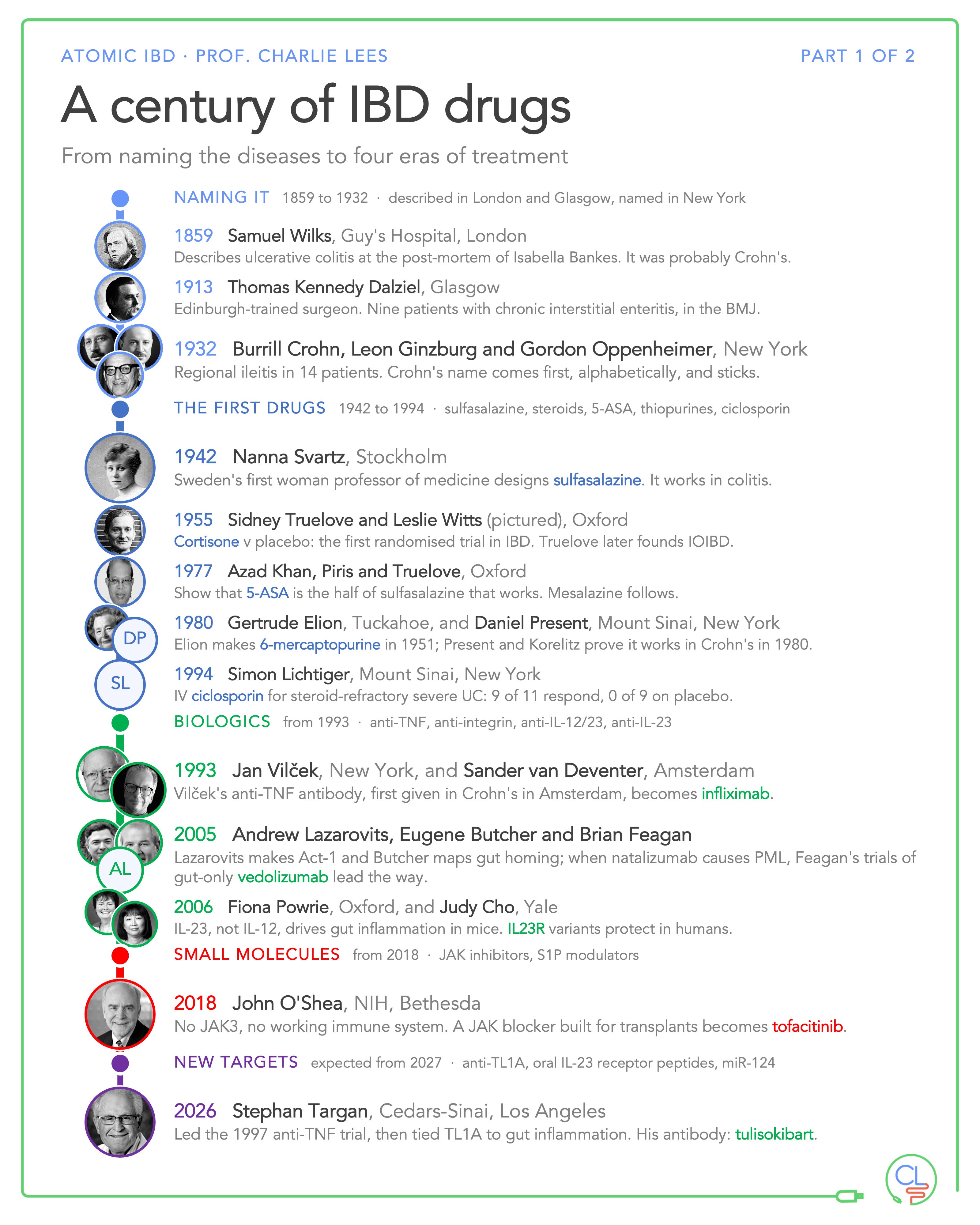
It starts with a post-mortem.
London, 1859. Isabella Bankes dies in Richmond, just outside the city, in May. She is 42. The doctor she lives with, Thomas Smethurst, is charged with poisoning her.
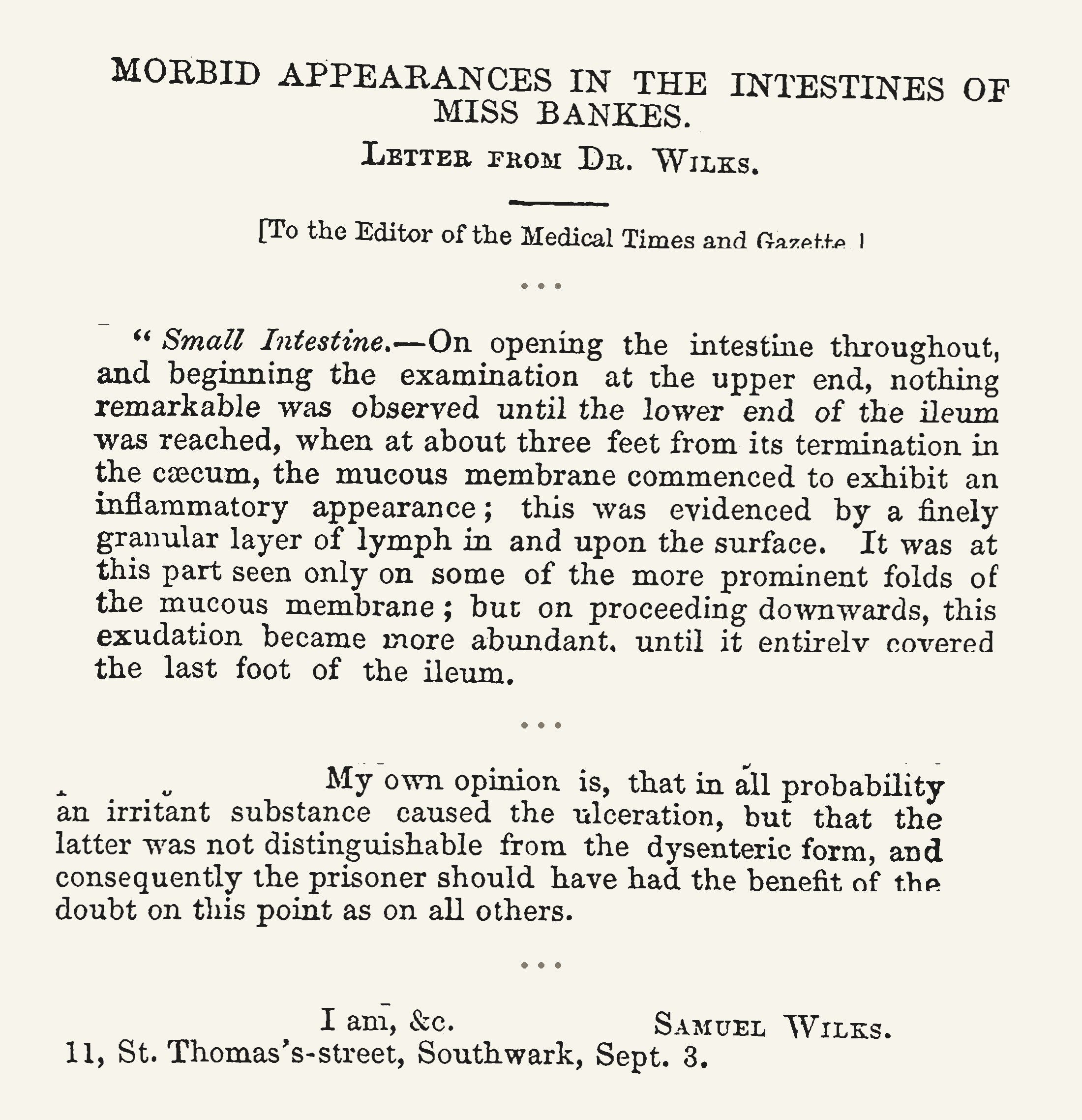
Samuel Wilks of Guy’s examines her bowel for the prosecution. The colon is ulcerated from end to end. The last foot of the ileum is covered in inflammatory exudate.
It was probably Crohn’s disease.
Smethurst is convicted and sentenced to death. Then Wilks writes to the Medical Times and Gazette. He thinks poison likely. But the bowel looks exactly like dysentery, so “the prisoner should have had the benefit of the doubt”. Smethurst gets a royal pardon.
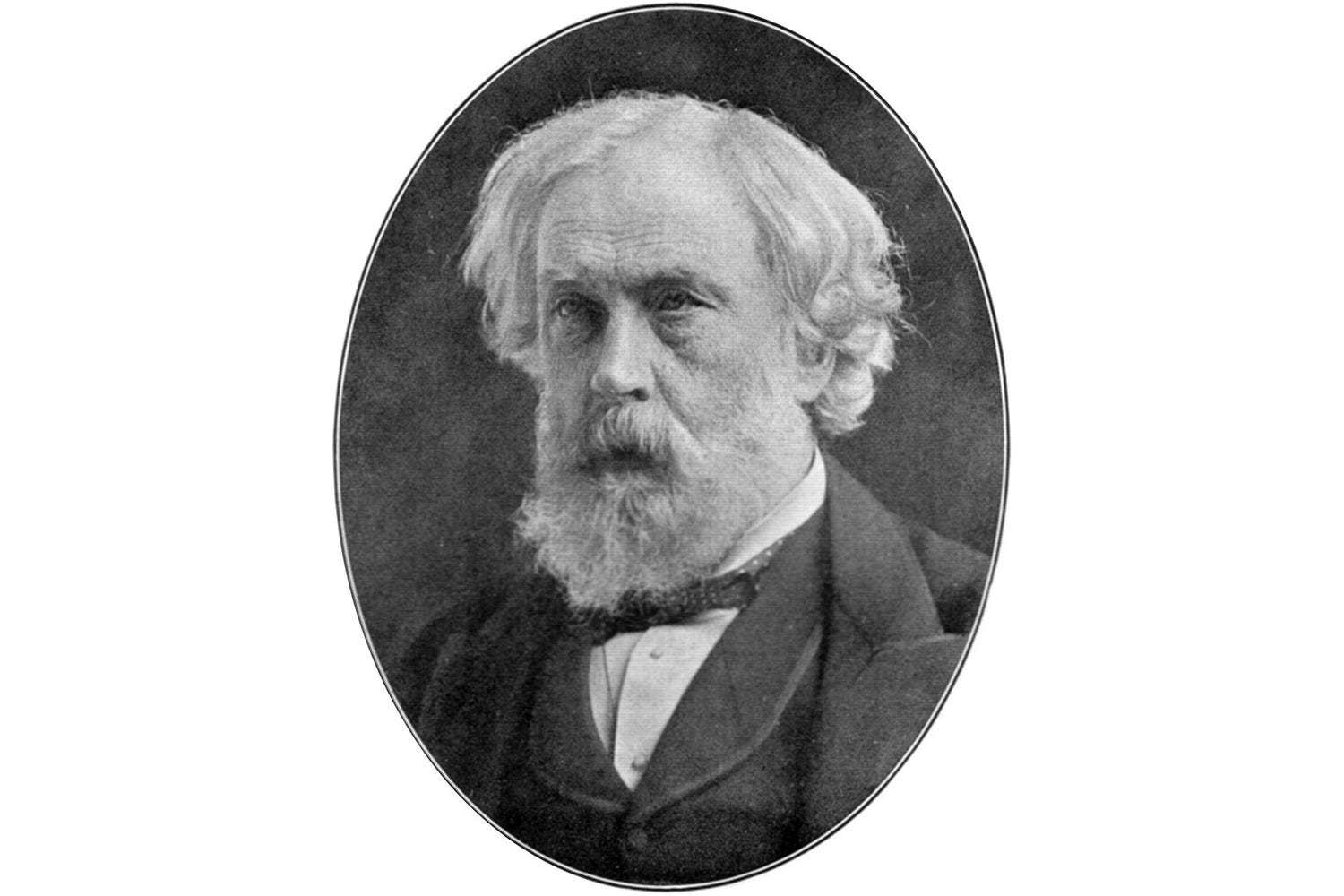
In 1875 Wilks and Walter Moxon draw the line between dysentery and what they call “simple ulcerative colitis”. The name sticks.
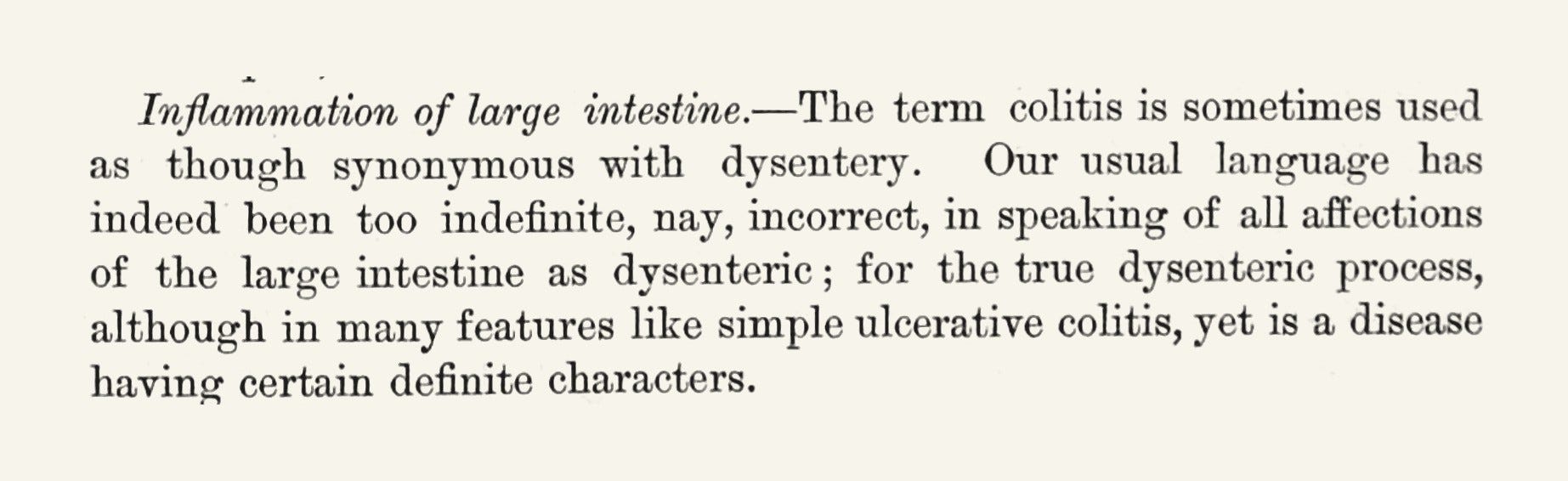
In 1913 Thomas Kennedy Dalziel, an Edinburgh-trained surgeon in Glasgow, describes it in the BMJ, 19 years before Crohn. He first gives it as a talk to the BMA in Brighton that July.
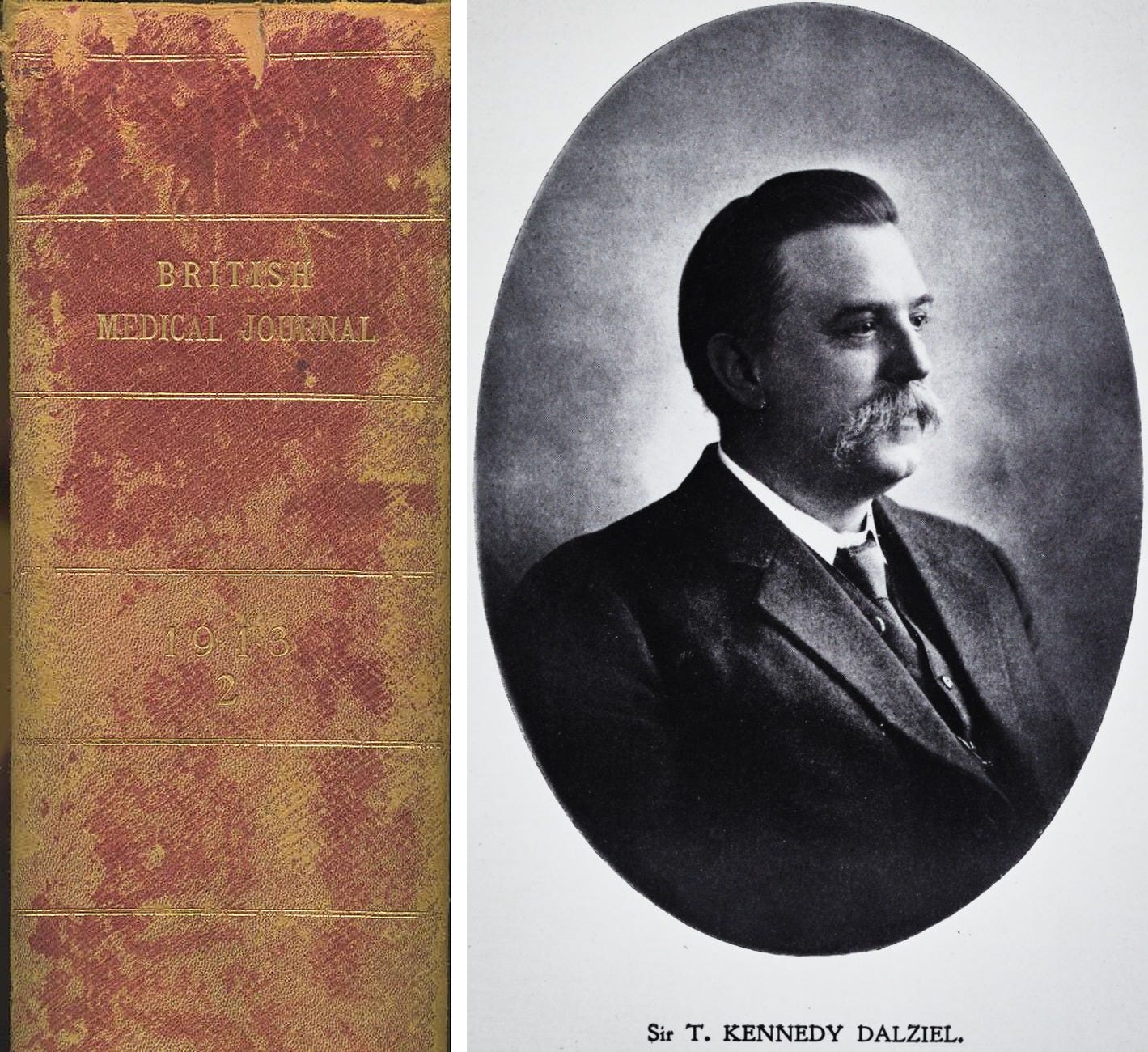
Nine patients. Jejunum, ileum, colon. A bowel with “the consistence and smoothness of an eel in a state of rigor mortis”. Seven of the nine recover after he cuts out the diseased segment.
He also points out that it looks just like Johne’s disease, a chronic bacterial enteritis of cattle. More than a century on, we are still arguing about that. (Dalziel, as it happens, bred pedigree shorthorns on his estate in Fife.)
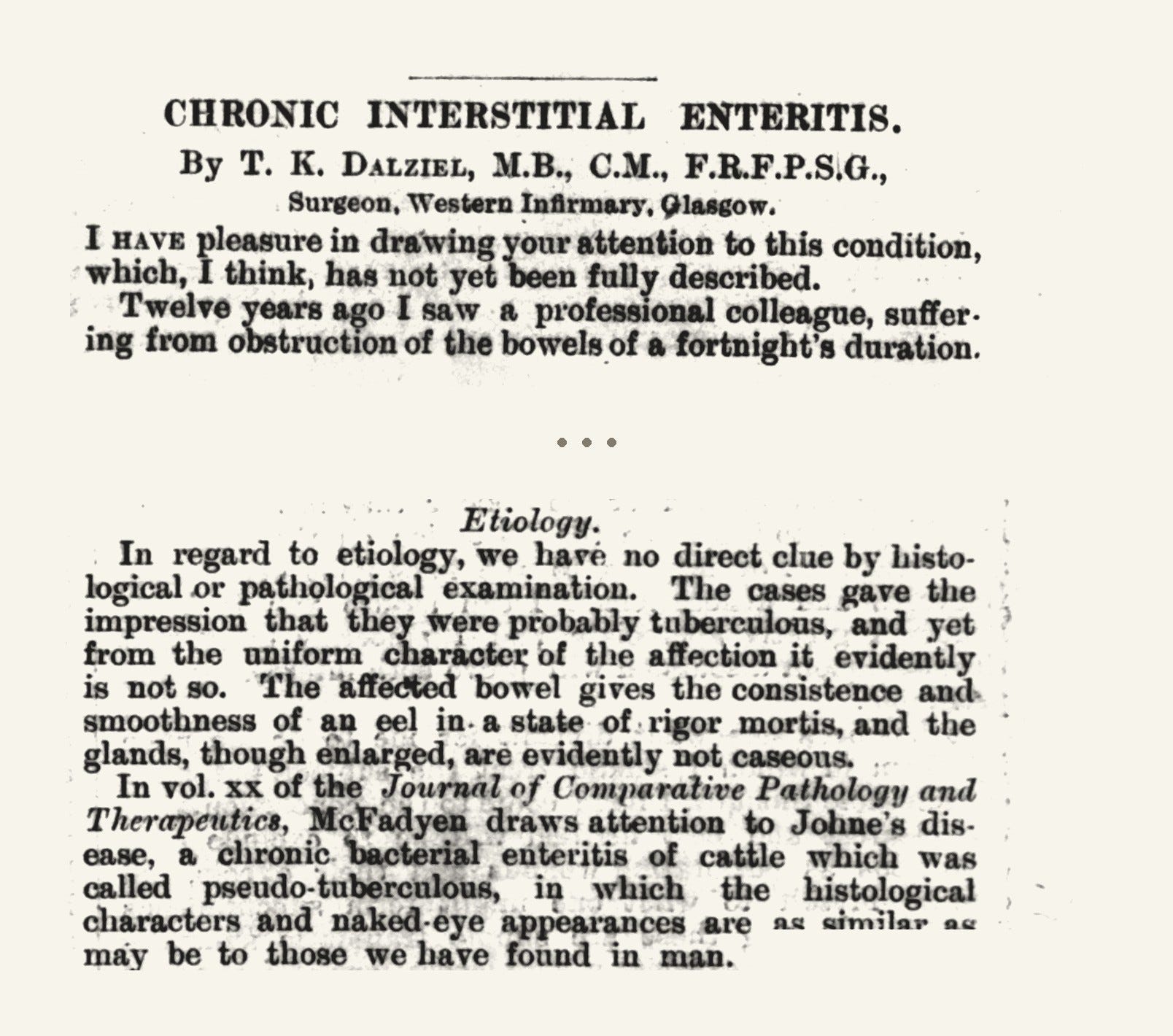
It should really be Dalziel’s disease. But then, I’m probably biased.
New York, 1932. Even Crohn’s own paper has a story.
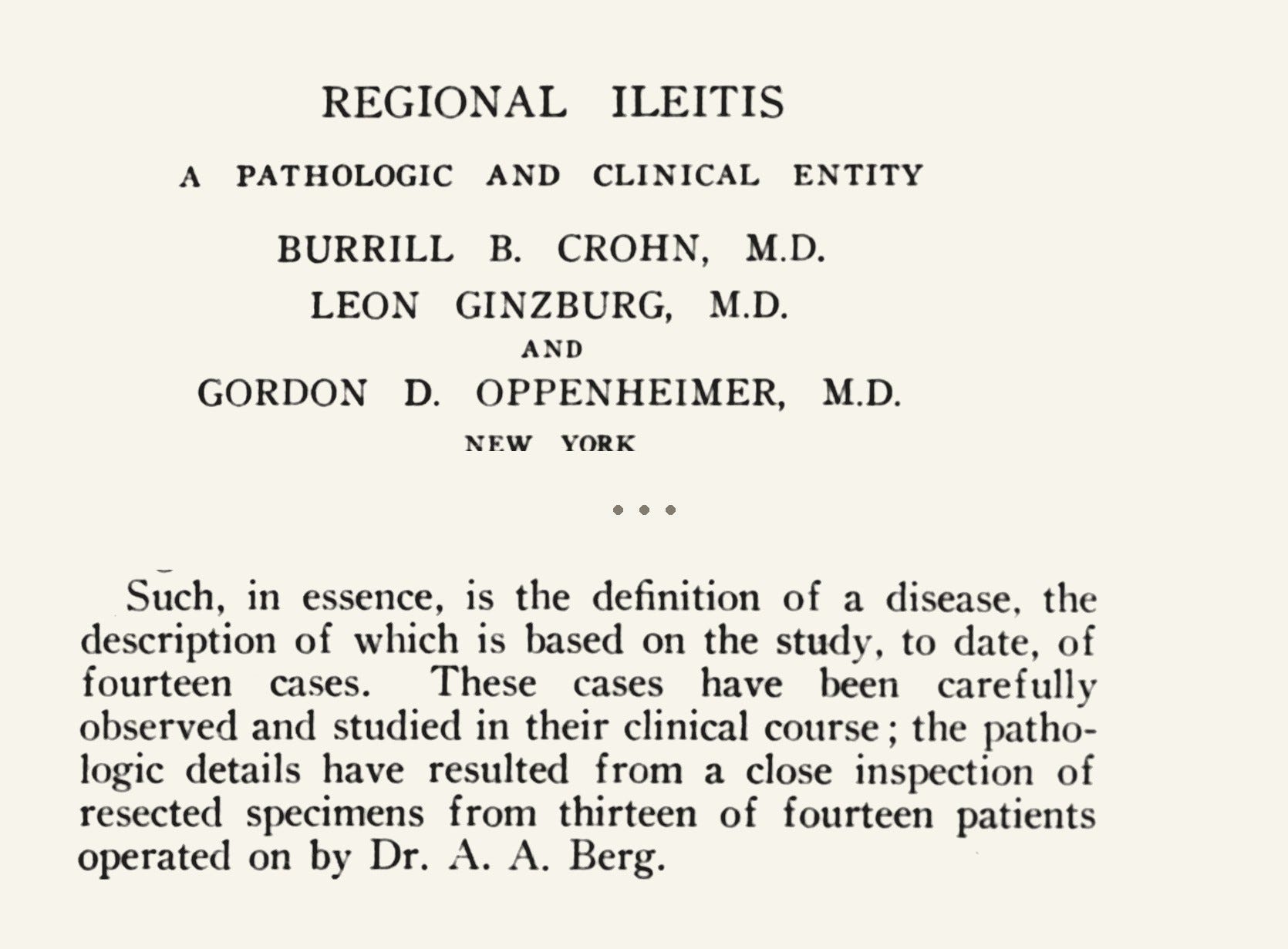
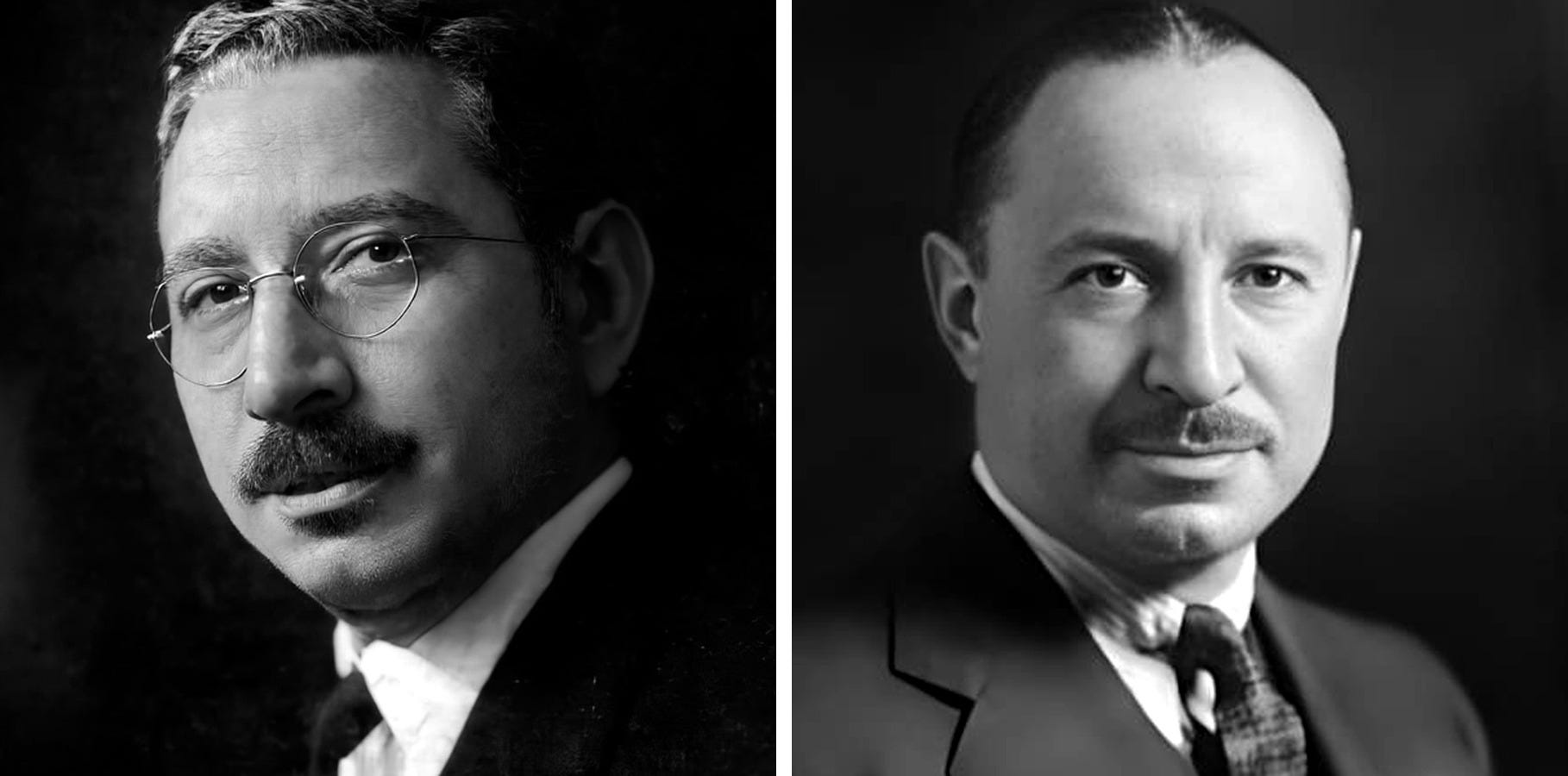
Leon Ginzburg and Gordon Oppenheimer, two surgeons working for A. A. Berg at Mount Sinai, were going through resected bowel in the pathology lab. Twelve of 52 specimens fitted nothing anyone had described. Berg made them share their draft with Burrill Crohn, a physician. Crohn added cases and presented it to the American Medical Association in New Orleans on 13 May 1932. Ginzburg had presented his own version eleven days earlier.
Berg had operated on 13 of the 14 patients. He declined to be an author. The three names went on in alphabetical order.
C comes first.
Late in life Ginzburg spent years trying to set the record straight. He died in 1988.
Their paper said “the terminal ileum is alone involved”. Dalziel had already seen it from the jejunum to the colon.
The first drugs
Then half a century of a handful of drugs. Sulfasalazine. Steroids. 5-ASA. Thiopurines. Ciclosporin.
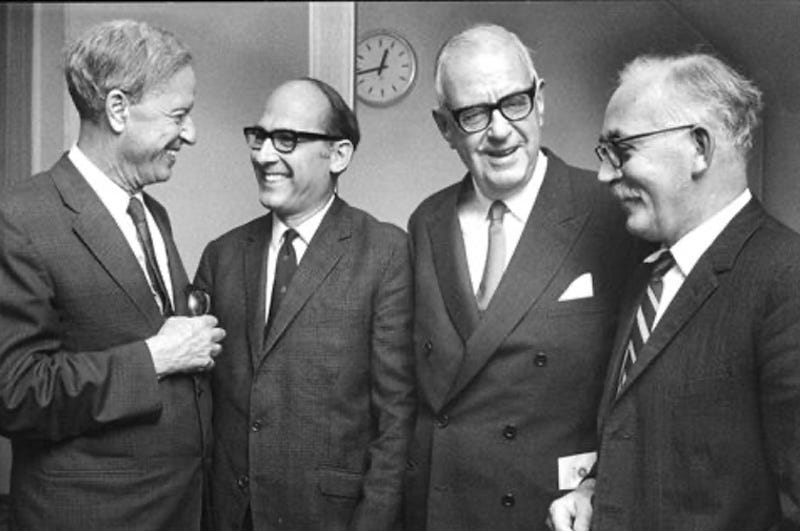
The first randomised trial in IBD? Cortisone v placebo, Oxford, 1955. Sidney Truelove and Leslie Witts led it. Edinburgh was one of four regions that joined in. Richard Doll, of smoking and lung cancer fame, took part in North-west London.
Writing a paper with Truelove was “a trial of strength”, often in the small hours. He was the first gastroenterologist in Britain to use a fibreoptic endoscope. When he retired he founded IOIBD.
Biologics
Then 1993. Sander van Deventer and his team in Amsterdam give Jan Vilček’s anti-TNF antibody, cA2, in Crohn’s for the first time. The first patient is a 12-year-old girl, treated on compassionate grounds. She responds after the first dose.
Infliximab. Everything changes. After that, gut-selective vedolizumab, IL-23, JAK inhibitors.
The people
But this is really about the people. Every drug has a story behind it, and the people in those stories deserve more credit than they get.
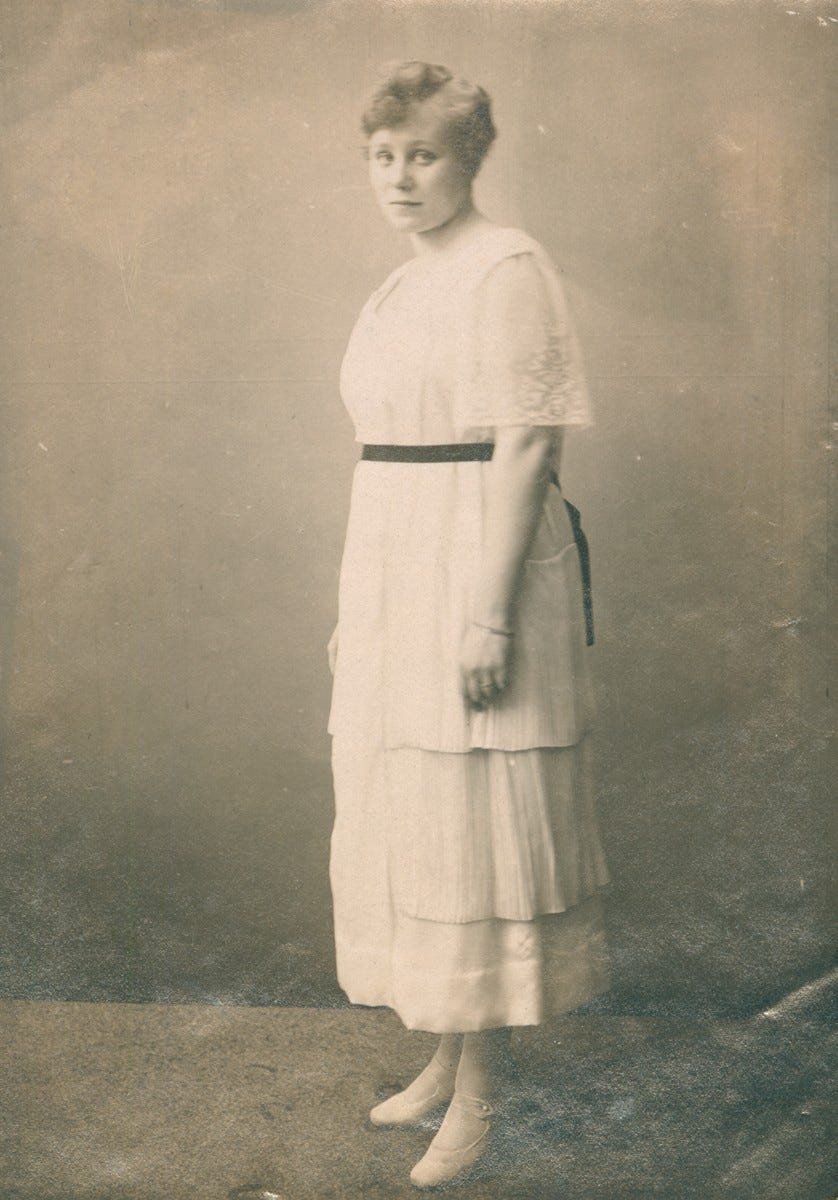
Nanna Svartz, Sweden’s first woman professor of medicine, designed sulfasalazine. She meant it for rheumatism, joining a sulfa antibiotic to a salicylate. It turned out to work in colitis. More than 80 years on, sulfasalazine is still on the WHO list of essential medicines.
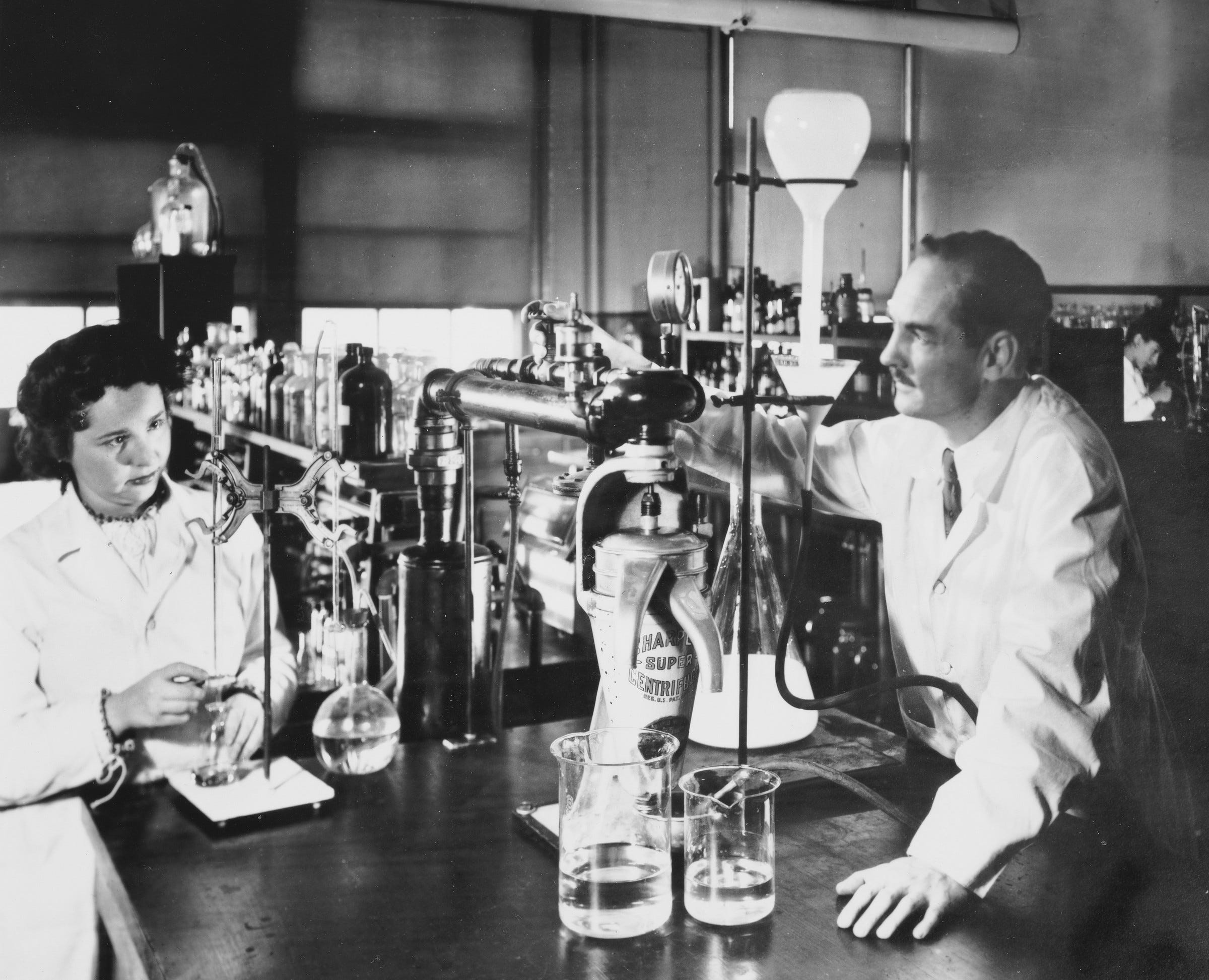
Gertrude Elion made 6-mercaptopurine and won a Nobel Prize. Her grandfather died of cancer when she was 15. That is why she went into science. She couldn’t get a research post, largely because she was a woman, and she gave up her PhD rather than leave the lab. Azathioprine came from the same bench.
The first to try a thiopurine in IBD? Not New York. Melbourne. Roy Bean, at the Repatriation General Hospital in Heidelberg, gave 6-MP for ulcerative colitis in 1962. By 1966 Ian Mackay’s team at the Royal Melbourne Hospital was reporting azathioprine in seven patients with colitis.
Eighteen years after Bean, Daniel Present at Mount Sinai and Burton Korelitz at Lenox Hill, both in New York, proved 6-MP works in Crohn’s. They also taught us patience. A third of their patients took more than three months to respond.
Azad Khan, from Bangladesh, showed which half of sulfasalazine actually works. In Oxford with Truelove, he gave patients enemas of the whole molecule and of each half. 5-ASA worked. Sulfapyridine didn’t. Then he went home to Dhaka and built gastroenterology in Bangladesh as its founding professor.
Jan Vilček’s story starts long before infliximab. In 1964 he was a young virologist in Bratislava, working on interferon. An invitation came to visit Vienna for a weekend. Marica, his wife, felt strongly they should go, and they never went back. By February 1965 they were in New York, and he was at NYU.
In 1984 NYU signed a deal with Centocor. Four years later Vilček and Junming Le had a mouse antibody to TNF, called A2. Centocor made it part human, cA2, and tried it first in septic shock. It failed. Then came rheumatoid arthritis in London, with Marc Feldmann and Ravinder Maini, and Crohn’s in Amsterdam. In 1998 cA2 was licensed for Crohn’s as infliximab. Vilček later gave a gift worth $105 million back to NYU, including his future royalties.
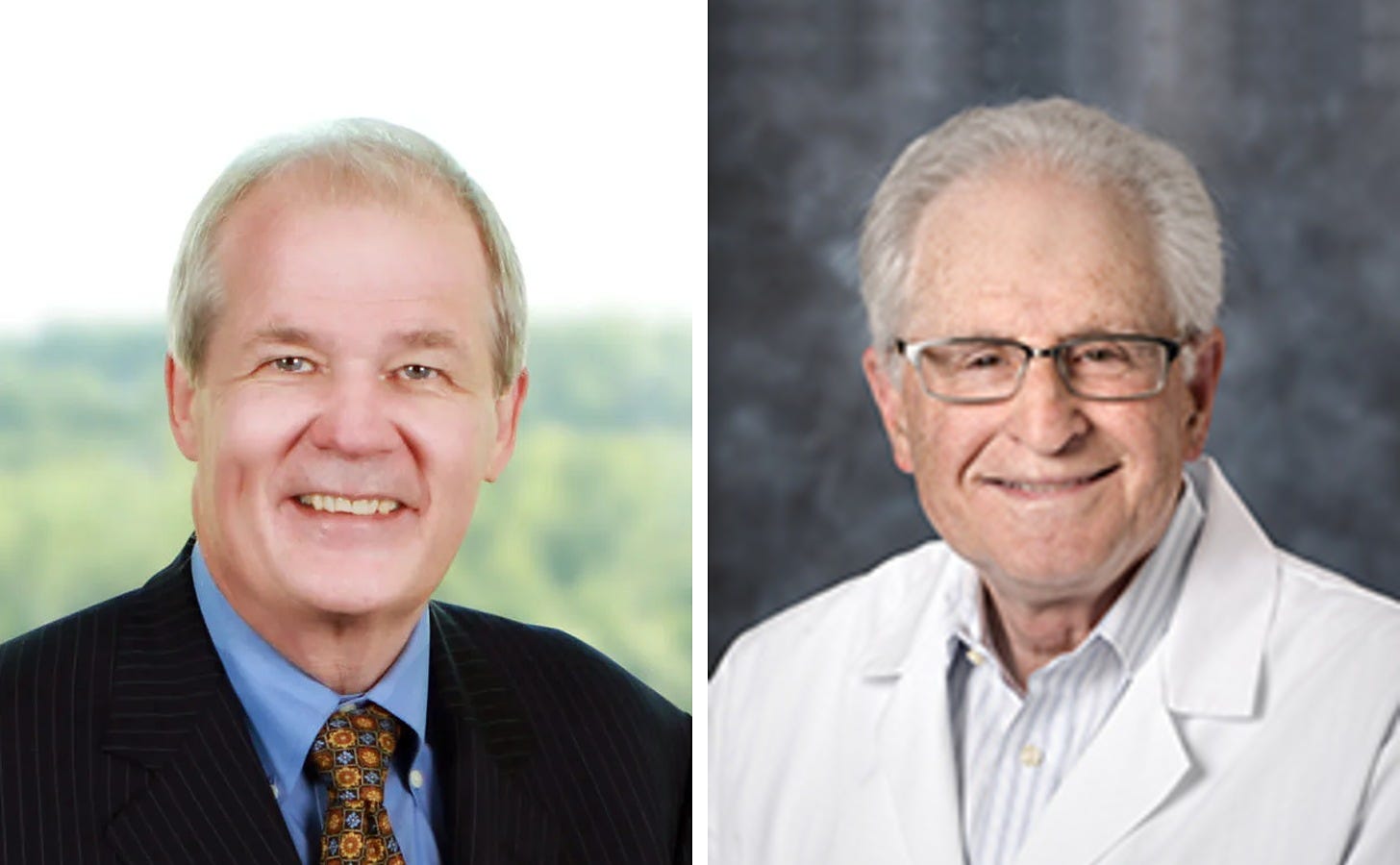
Andrew Lazarovits made the antibody that became vedolizumab. In 1984, as a young Canadian fellow at Massachusetts General Hospital in Boston, he made a mouse antibody to a marker on activated T cells and called it Act-1. Nobody yet knew what it really bound. That came in 1993, when Act-1 turned out to recognise α4β7, the integrin that Irving Weissman’s and Eugene Butcher’s labs at Stanford had shown steers lymphocytes home to the gut. LeukoSite humanised it as LDP-02. It became MLN02, then MLN0002, then vedolizumab. Lazarovits died of cancer in 1999, aged 44, fifteen years before it was licensed.
Brian Feagan gave the very first dose of vedolizumab, in London, Ontario, and led the trials from phase 2 to GEMINI 1 that brought it to the clinic. It is hard to overstate how much modern IBD trial culture and clinical standards were shaped by his work. He pioneered central reading of endoscopy in trials, now a global standard. More than 500 papers. A sharp intellect, a tireless work ethic and a great sense of humour. He died last November, a towering giant of IBD trials.
Stephan Targan led the first big infliximab trial. One infusion. 108 patients. 65% responding by week 4, against 17% on placebo. Then he tied TL1A to gut inflammation. In 2005 a Japanese genome-wide study identified TNFSF15, the gene that encodes TL1A, as a Crohn’s susceptibility gene. Biology and genetics pointing at the same target. Two decades on that is tulisokibart, and in 2023 Merck paid $10.8 billion for the company developing it.
There are many others. Many of them will feature in Part 2, on the pivotal trials that taught us how to use these drugs. Others I have simply missed. Who did I miss?
We should celebrate the people behind the discoveries. And not forget the fascinating, rich history of IBD.
Thank you Charlie so much for a great summary. Great history, we should always acknowledge and remember those people who were dedicated to science and research. It was a great read this morning with a cup of coffee. Thanks again