


Part One was about the remodel, the shifting shape of IBD care, and where the pressure is coming from.
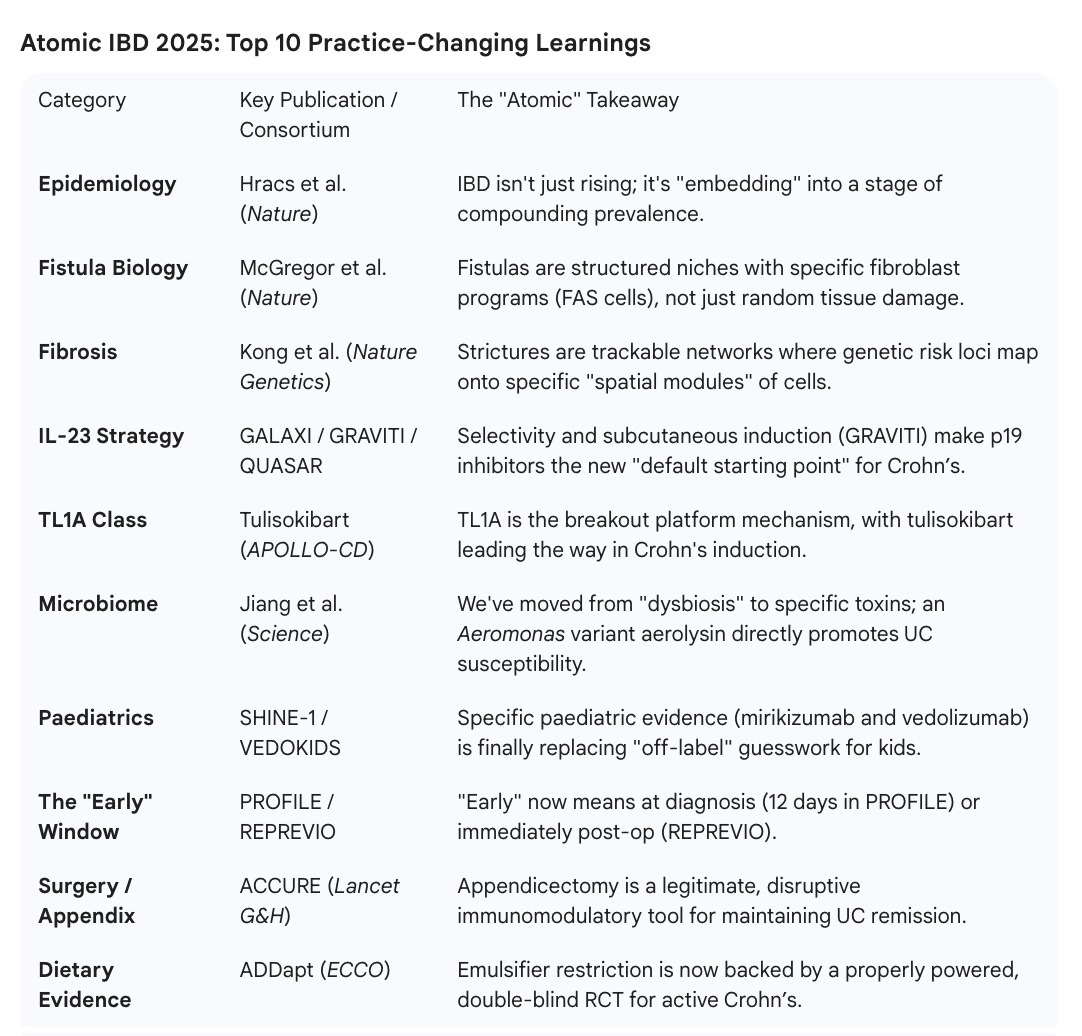
This second post is the evidence base that made 2025 feel like a hinge year. It spans system-level epidemiology, deep tissue biology that finally gives names to fistula tracts and strictures, and trial data that changes what we say to patients next week. One important note before we start: this list is not exhaustive, and any omissions are my oversight.
Let’s get into it.
The global map
IBD is no longer “rising”. It is embedding.
The Nature macro-epidemiology paper from the Calgary and Hong Kong groups (Kaplan and Ng) is the clearest framing I have seen for what comes next: a predictable evolution across epidemiologic stages, and the uncomfortable arithmetic of compounding prevalence. Incidence may plateau, but total burden keeps climbing as patients live longer and health systems carry IBD across decades.
The point is not panic, it is planning.
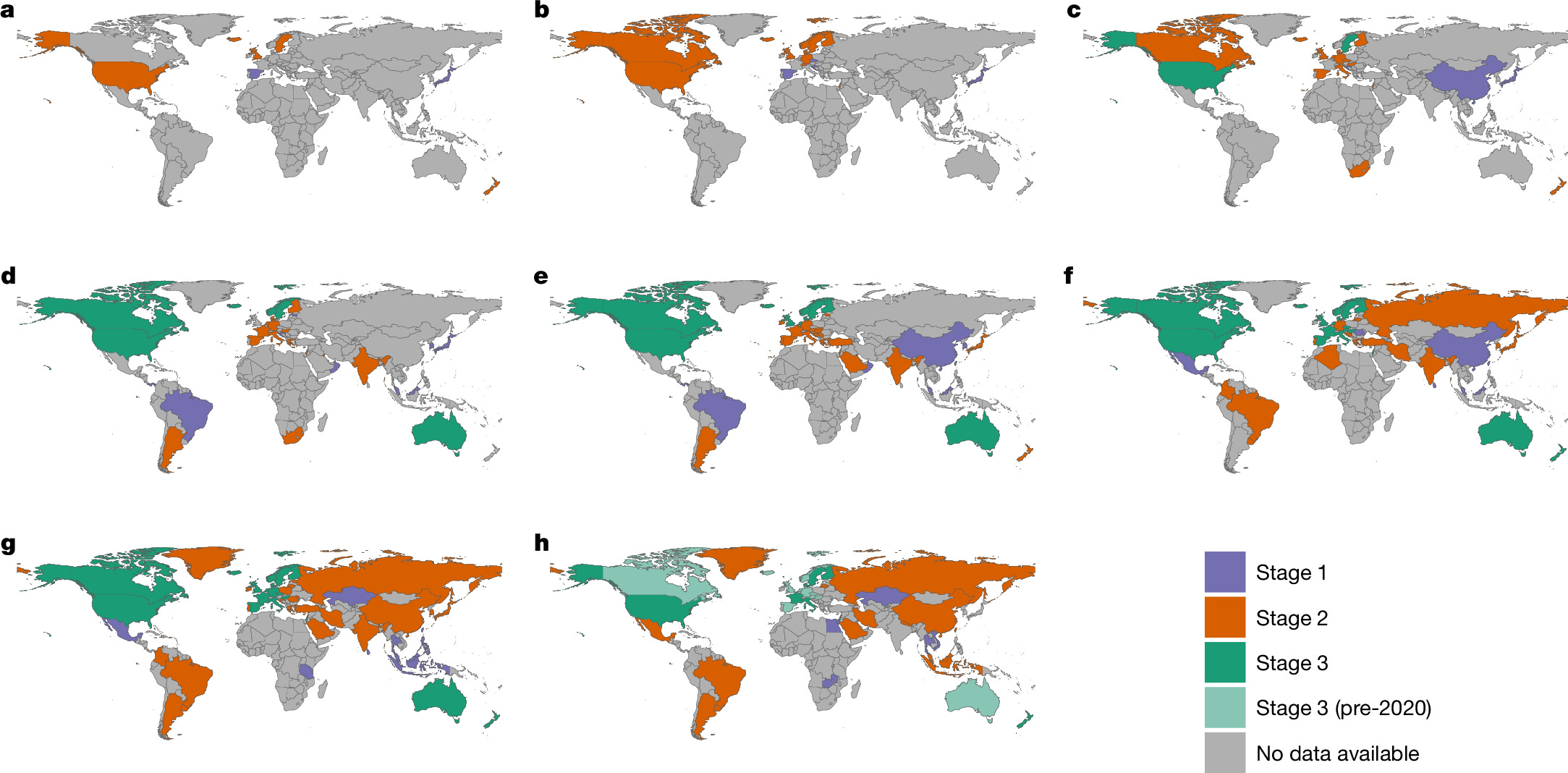
Reference: Hracs L et al. Nature. 2025. Global evolution of inflammatory bowel disease across epidemiologic stages.
Fistulas, finally
Perianal Crohn’s is not a side quest. It is a phenotype with its own biology and its own evidence gaps.
Two things happened in 2025.
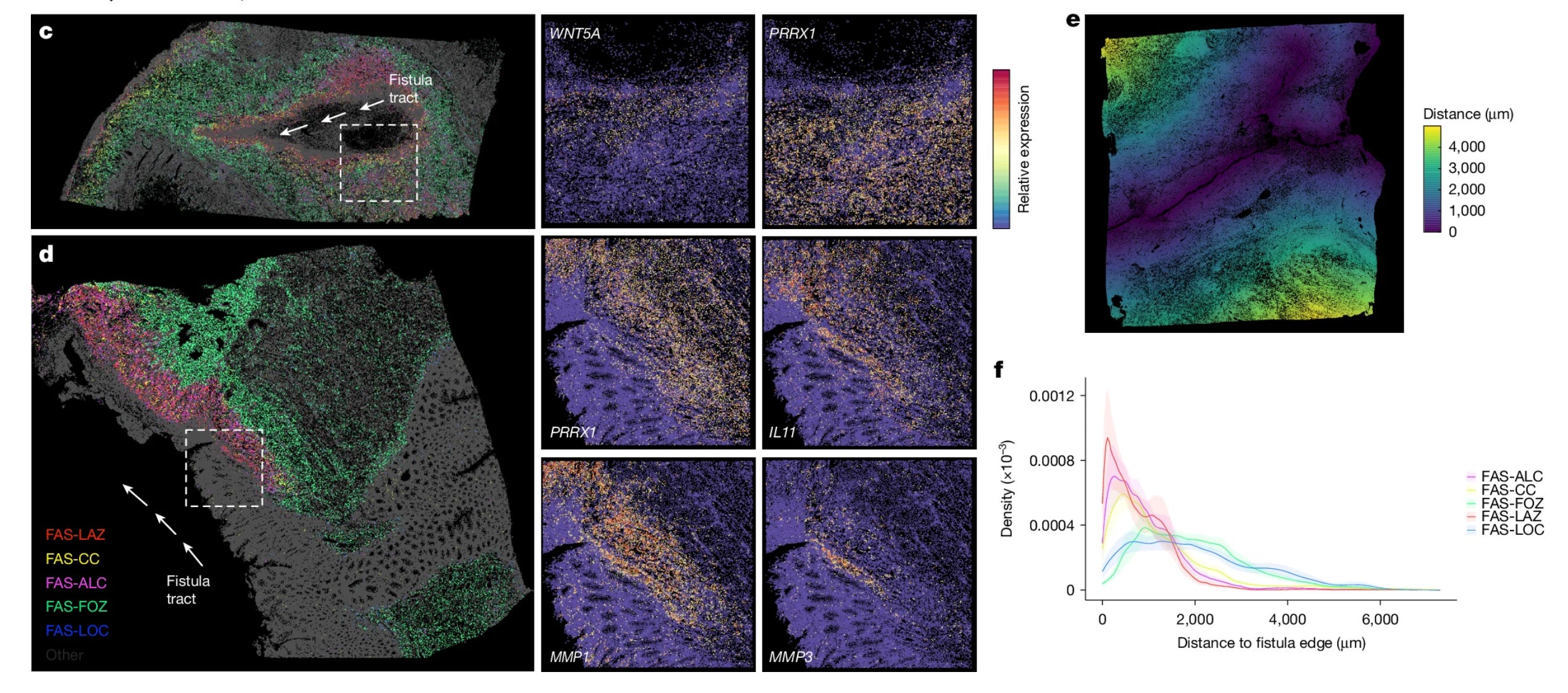
First, the deep tissue work got sharper: spatial atlases are starting to treat fistula tracts and strictures as structured niches, not just damage.
The deep spatial multi-omics study from Alison Simmons’s lab in Oxford builds a high-resolution atlas of 68 intestinal fistulae and shows that fistula tracts are not “just inflammation”, they have a structured, layered biology. They identify a fistula-associated stromal (FAS) fibroblast programme arranged in concentric zones (from proliferative, lumen-adjacent cells through an active lesion core to an outer pro-fibrotic zone), with tightly linked immune niches and extracellular matrix remodelling that likely stabilises and perpetuates the tract.
A key take-home is that common cellular pathways appear to underpin fistulae across anatomical locations, and that targeting fibroblast behaviour (selectively limiting invasive/fibrotic programmes while preserving repair) may be central if we want better medical options for fistulising Crohn’s disease.
Second, the clinical world started to converge around definitions that make trials possible.
A Lancet Gastroenterology and Hepatology systematic review and consensus paper tackled isolated perianal Crohn’s disease head-on, proposing diagnostic criteria and practical management advice, then testing the approach in a prospective cohort of 50 “idiopathic fistula” patients where 12% met criteria. That is exactly the kind of work that turns an awkward clinic label into something you can recruit, stratify, and study.
This is also where TopClass matters.
The consortium is explicitly trying to standardise how we define, image, phenotype, and treat perianal Crohn’s across centres and countries, so that trials are comparable and registries speak the same language.
If you cannot define it, you cannot trial it.
If you cannot trial it, you cannot fix it.
References: McGregor C et al. Nature. 2025. Spatial fibroblast niches define Crohn’s fistulae.; Hanna et al. Lancet Gastroenterol Hepatol. 2025. Isolated perianal Crohn’s disease consensus and criteria.; TopClass Consortium (international perianal Crohn’s collaboration).
Fibrosis gets a cell type
Strictures and fistulas have always been where medical therapy has struggled in Crohn’s disease.
The 2025 shift is that fibrosis is starting to look like a tractable network: spatial modules, specific fibroblast programs, immune crosstalk, and the first real bridges from genetic risk to tissue behaviour. The stricturing Crohn’s spatial paper (Boston heavyweights here) is the kind of work that makes anti-fibrotic development feel less speculative and more like a sequence of solvable steps.
It does not give us an anti-stricture drug tomorrow, but it tells us what we would even be targeting.
Reference: Kong W et al. Nature Genetics. 2025. Single-cell and spatial transcriptomics of stricturing Crohn’s disease highlights a fibrosis-associated network.
IL-23 p19, briefly
Part One already covered this in detail, so I am not repeating it here.
The short version is that 2025 produced enough comparative and program-level data that IL-23 p19 moved from “promising” to “default starting point” for many Crohn’s pathways, and it did so because of outcomes and logistics, not hype.
Key 2025 publications and programs:
Janssen: GALAXI (Crohn’s, phase 3 program)
Janssen: GRAVITI and ASTRO (subcutaneous induction and maintenance)
Eli Lilly: mirikizumab program extensions, including paediatrics (see SHINE-1 below)
AbbVie: risankizumab UC program, including COMMAND (maintenance) (noting the shift toward class-level positioning)
TL1A becomes crowded
If IL-23 is now established, TL1A feels like the platform mechanism that companies are trying to line up behind.
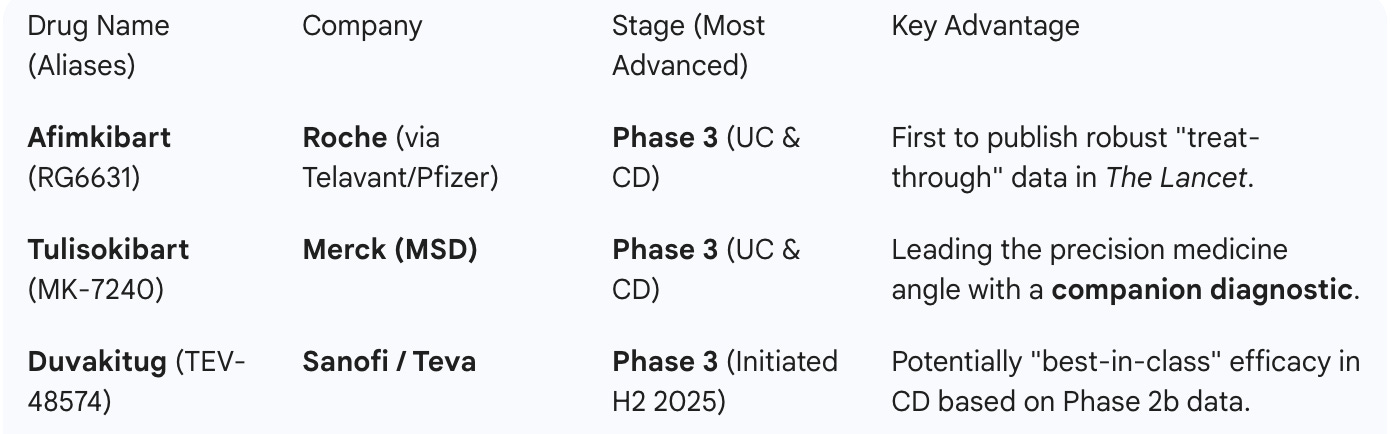
Key 2025 TL1A datasets to know:
• Roche: afimkibart, TUSCANY-2 (ulcerative colitis). Phase 2b, dose-ranging, treat-through design with 1-year follow-up.
• Merck (via Prometheus): tulisokibart, APOLLO-CD (Crohn’s disease). Phase 2a induction with an endoscopic response signal and biomarker stratification.
• Sanofi and Teva: duvakitug, RELIEVE UCCD (ulcerative colitis and Crohn’s). Basket-style induction study with strong endoscopic response in Crohn’s at week 14.
A second wave is also taking shape, but it is mostly product engineering rather than new biology: longer half-life, fewer injections, and potentially different ways into the same axis.
That is what is driving the TL1A race: multiple credible datasets, multiple corporate homes, and a very fast move into late-stage development.
References: Merck/Prometheus. Tulisokibart APOLLO-CD. Lancet Gastroenterol Hepatol. 2025; Pfizer/Roivant/Roche. Afimkibart TUSCANY-2. Lancet Gastroenterol Hepatol. 2025.
A toxin, not “the microbiome”
The microbiome story is often too blurry to act on.
A Science paper from a heavily China-based collaboration (Nanjing and beyond) sharpened it into something much more concrete: an Aeromonas variant producing aerolysin that promotes susceptibility to ulcerative colitis.
This matters because it pushes us toward a more testable framing:
Not “dysbiosis” as a vibe
But specific microbial functions and specific toxins that can be detected, quantified, and potentially neutralised
If the next era of microbiome therapeutics works, I suspect it will look more like infectious diseases than probiotics.
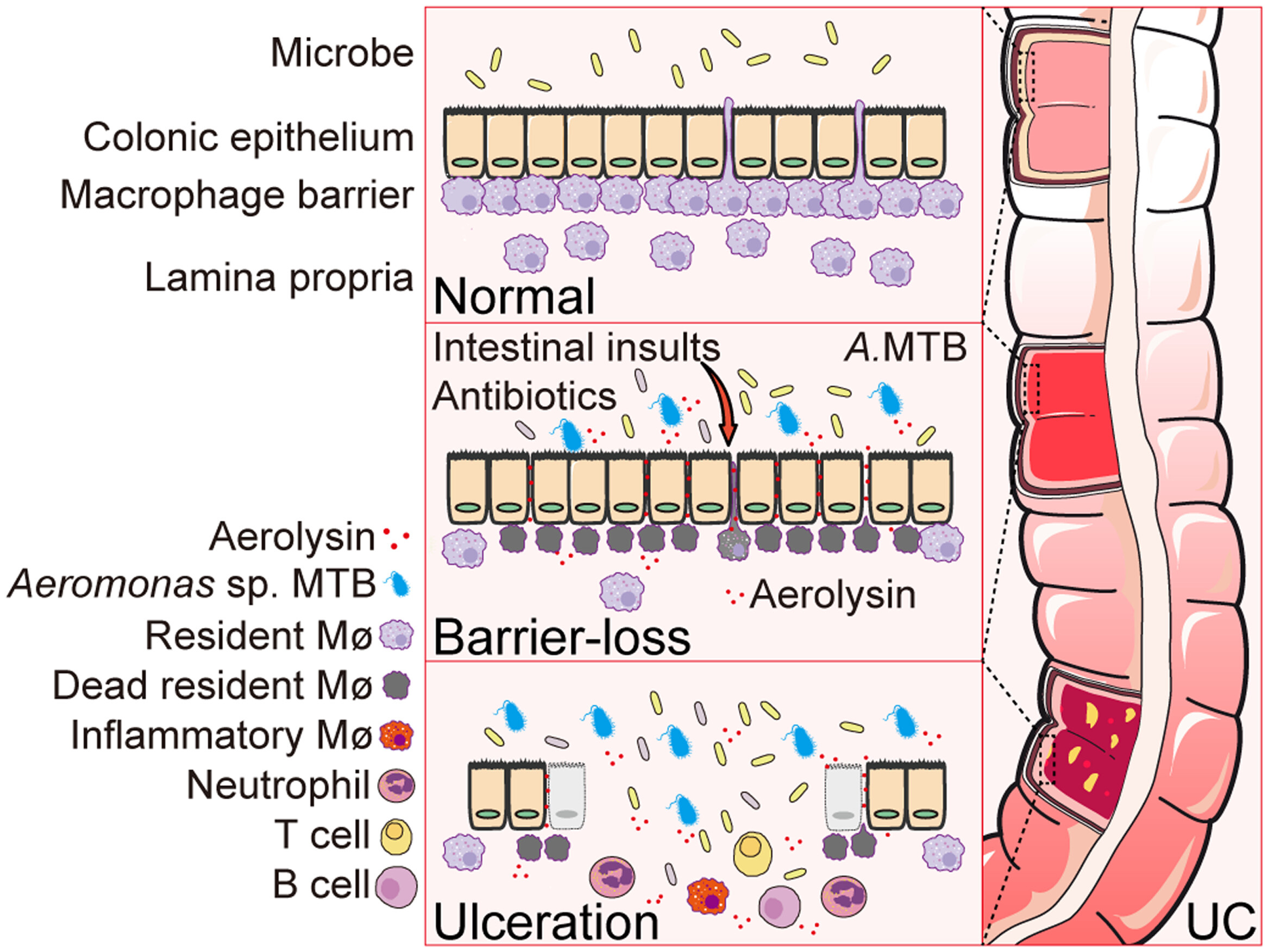
Reference: Jiang Z et al. Science. 2025. An Aeromonas variant that produces aerolysin promotes susceptibility to ulcerative colitis.
Paediatrics needs its own evidence
Paediatric IBD is not just small adults. It is earlier disease biology, different growth and development trade-offs, and a narrower evidence base.
Two Lancet Gastroenterology and Hepatology papers help here.
Mirikizumab in paediatric UC (SHINE-1) enrolled across 19 centres in Canada, Israel, Japan, South Korea, and the USA. Week 12 outcomes included clinical response (69.2%), clinical remission (38.5%), and endoscopic remission (53.8%) by the modified Mayo score, with week 52 signals that justify larger work.
VEDOKIDS followed vedolizumab maintenance in children over 54 weeks. The interpretation was straightforward: vedolizumab maintenance appears safe and efficacious, with higher efficacy in UC than Crohn’s disease.
We should treat these as what they are: scaffolding for the next generation of paediatric trials, and a reminder that off-label is still doing too much heavy lifting.
References: Eli Lilly. SHINE-1. Lancet Gastroenterol Hepatol. 2025; Atia O et al. VEDOKIDS. Lancet Gastroenterol Hepatol. 2025
What “early” means in Crohn’s now
Early therapy is a phrase that used to mean anything.
Last year we got clarity on what early really means in Crohn’s disease. It means at the point of diagnosis. In PROFILE, the median time from diagnosis to enrolment was around 12 days. It is hard to read that and keep calling a two-year delay “early.”
Then there is earlier-than-early, prevention.
Groups like INTERCEPT are explicitly building towards identifying and intervening in pre-IBD states, which is a different ambition entirely. This is important work, gathering steam. Great to see meaningful funding behind this effort.
And there is a third “early” that matters clinically: post-operative Crohn’s disease, when the macroscopic disease has been resected and you have a clean window. REPREVIO showed that vedolizumab started within weeks of ileocolonic resection reduced endoscopic recurrence versus placebo.
Finally, still on vedolizumab, the LOVE-CD study asks the simple but important question: does “early vs late” Crohn’s change what we see with the same drug? It is a helpful framing, even before you argue about specific definitions.
References: D’Haens et al. REPREVIO. Lancet Gastroenterology and Hepatology, 2025.
LOVE-CD Study Group. Vedolizumab in early and late Crohn’s disease. Lancet Gastroenterology and Hepatology, 2026 online.
Trials are going global
Global access gaps are real, but global trial participation is widening too.
ENLIGHT UC evaluated etrasimod in patients with moderately to severely active UC in East Asia, and concluded it was effective and well tolerated as an oral induction and maintenance treatment in that population. Funding came from Everest Medicines, a sign of how regional development partners are now central to “global” IBD drug development.
A related Lancet Gastroenterology & Hepatology commentary makes the complementary point: even as trial footprints widen, whole regions remain under-represented, and the Middle East and north Africa (MENA) is a clear example. The authors argue that if we want “global” trials to produce genuinely generalisable evidence and fair access pathways, sponsors need to design for regional participation up front, with transparent reporting of who was enrolled and where.
It is a useful check against complacency. And a reminder that the next wave of evidence will be geographically broader than the last.
Reference: Wu K et al. ENLIGHT UC. and Mohammad Shebab et al, both Lancet Gastroenterol Hepatol. 2025.
Appendicectomy in ulcerative colitis still feels disruptive
Appendicectomy keeps returning as a serious idea, not a fringe curiosity, because the data refuse to go away.
ACCURE is the landmark here: appendicectomy plus standard therapy versus standard therapy alone for maintenance of remission in ulcerative colitis. It is the kind of trial that forces you to treat the appendix as immune tissue with influence, not a historical leftover.
Alongside that, the COSTA programme is pushing the question in a slightly different direction, appendicectomy as a potential induction strategy in harder-to-treat UC cohorts. Even if you remain skeptical, it is now a coherent research line, not a one-off.
References. ACCURE Study Group. Appendicectomy plus standard therapy versus standard therapy. Lancet Gastroenterology and Hepatology, 2025. Visser et al. COSTA appendectomy abstract (DOP053). ECCO 2025.
Diet returns with real trial architecture
We have had decades of diet opinions and far fewer diet trials that stand up in clinic.
ADDapt is one of the exceptions. Presented by Aaron Bancil at ECCO 2025, it was a properly powered, randomised, double-blind, placebo-controlled design using a low-emulsifier diet and a re-supplementation challenge. Whatever your prior, this is the direction diet research needs to go.
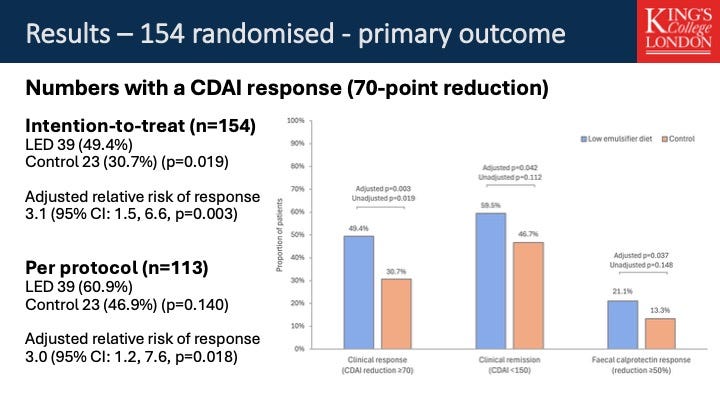
Reference. Bancil et al. Emulsifier restriction is an effective therapy for active Crohn’s disease (ADDapt). ECCO 2025, DOP097.
Acute severe UC is still where we need to be humble
Two themes stood out for me: optimisation of what we already do, and urgency for better rescue strategies.
PREDICT-UC is important even though it sits at the very end of 2024, because it gives real-world clarity on a question that comes up in every on-call week: is a first dose of infliximab 10 mg/kg better than 5 mg/kg in steroid-refractory acute severe UC? The answer in that trial was no. But for sicker patients with lower albumins the higher dose is still the default.
On the pipeline side, the idea of adding upadacitinib earlier in the admission is gaining momentum. ACCESO is leading the way: upa (or placebo) plus standard intravenous steroids on day one of admission, designed to test whether earlier combination reduces the need for subsequent rescue and surgery.
Reference. Choy et al. PREDICT-UC. Lancet Gastroenterology and Hepatology, 2024.
ACCESO trial registration (upadacitinib plus IV steroids).
Looking sideways
Some of the most interesting IBD thinking still comes from watching adjacent fields.
TYK2 is still the clean-oral dream for many. Takeda’s phase 3 plaque psoriasis data for zasocitinib (TAK-279) is not an IBD result, but it is a signal that highly selective TYK2 inhibition is maturing fast. And IBD is next.
Bioelectronic medicine is inching from concept to clinical reality. A randomised, double-blind, sham-controlled trial of vagus nerve stimulation in rheumatoid arthritis just published in Nature Medicine is a serious piece of evidence for the “inflammatory reflex” as a modifiable system.
Early-onset colorectal cancer trends continue to be a background alarm bell. For IBD teams, it is another reason to stay disciplined about inflammation control and surveillance quality.
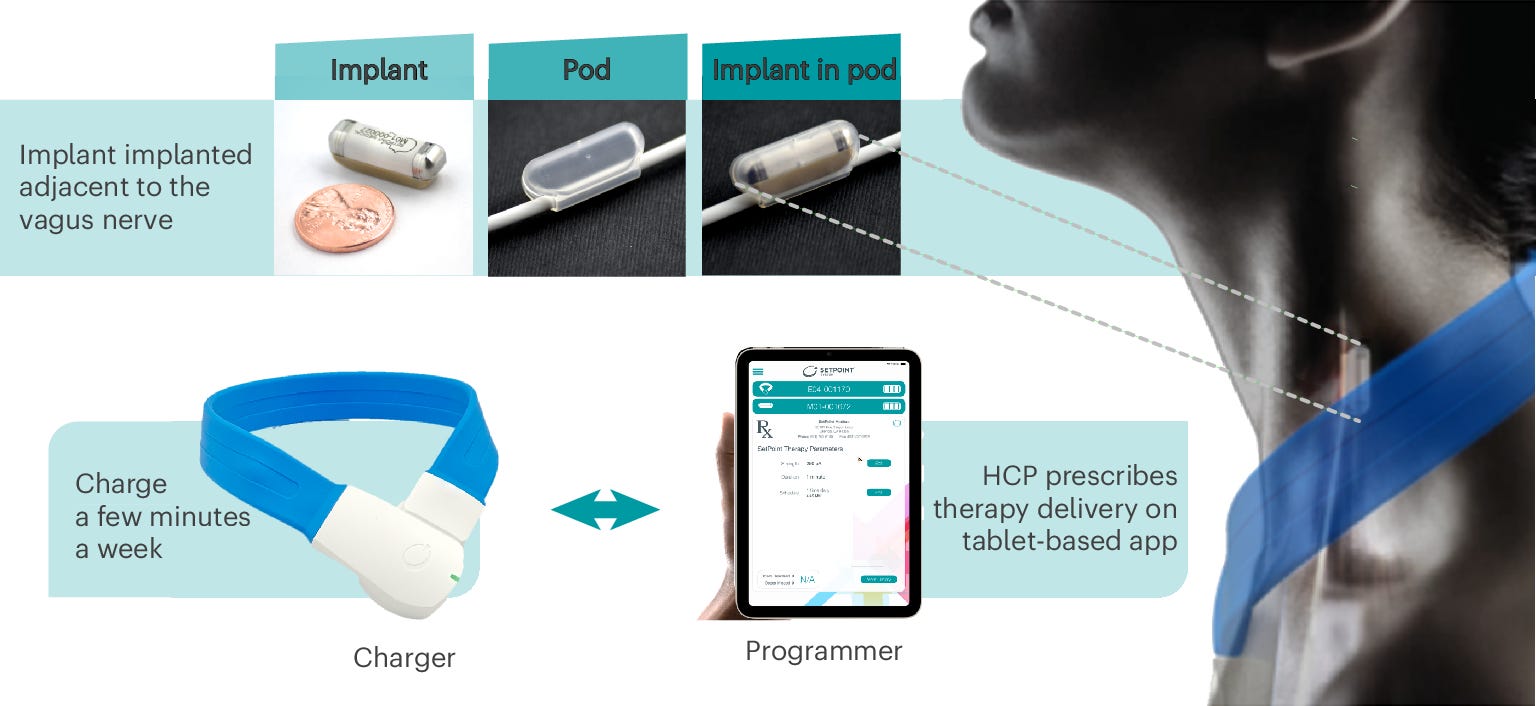
Reference. Takeda newsroom. Zasocitinib (TAK-279) phase 3 psoriasis update. 2025.
Koopman et al. Vagus nerve stimulation for rheumatoid arthritis. Nature Medicine, 2025.
Sung et al. Colorectal cancer incidence trends in younger versus older adults. Lancet Oncology, 2025.
Honourable mentions and near misses
Obefazimod (Abivax) deserves to be on any 2025 list because the phase 3 induction programme hit its endpoints and kept the oral innovation drumbeat going. Maintenance is still the real punchline.
SOR102 is an oral bispecific inhibitor of TNF and IL-23 tested in a first-in-human phase 1 study in healthy participants and patients with UC. By day 42, symptomatic remission was reported in 43% of the once-daily group and 56% of the twice-daily group, versus none in placebo, with a favourable safety profile supporting development.
MORF-057 is a good example of a “near miss” story that can still be valuable. Public reporting around EMERALD-2 highlights numerically higher remission with a placebo response that was higher than expected, and the strategic pivot toward combination approaches is already visible in trial registries pairing MORF-057 with mirikizumab.
References. Abivax press release. ABTECT-1 and ABTECT-2 induction. 2025. Sorriso Pharmaceuticals. SOR102 phase 1. Lancet Gastroenterol Hepatol. Epub 2025; issue Jan 2026. UEG Week 2025 programme. EMERALD-2 results session. ClinicalTrials.gov. MORF-057 plus mirikizumab combination study.
A human pause
Before Part Three, one moment of stillness.
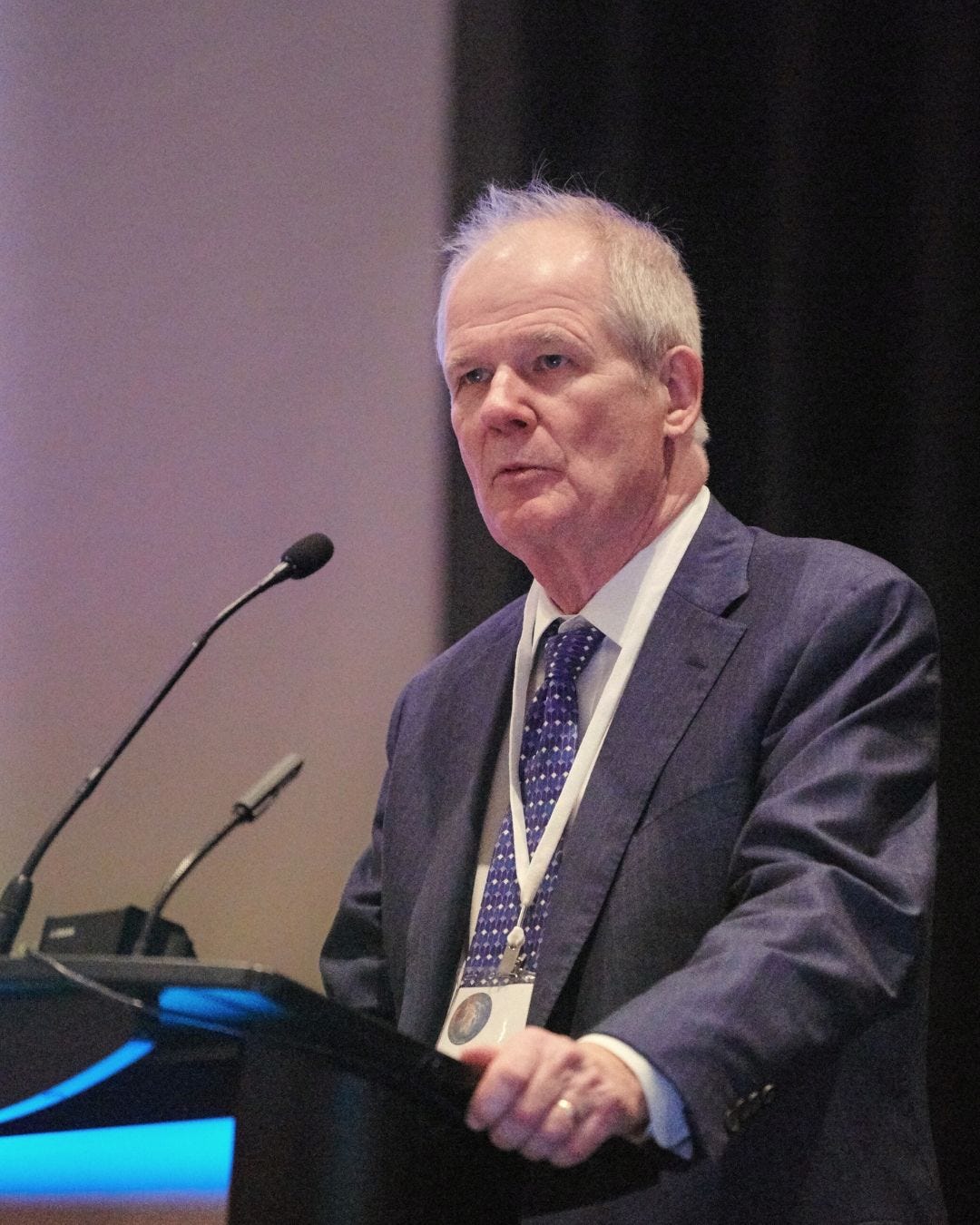
Brian Feagan died recently, and it is hard to overstate how much modern IBD trial culture and clinical standards were shaped by his work and his insistence on progress and clarity.
And a thank you, sincerely, to the people who make these papers real: researchers and basic scientists, gastroenterologists and surgeons, IBD nurses and research nurses, pharmacists, trial coordinators, and the industry and digital teams who build the tools.
Most of all, to patients, who keep showing up, taking risks, and teaching the rest of us what matters.
I suffered through UC from 2015 to 2021. In October '21, I had an emergency Appendectomy that lead to full UC remission within weeks. I continue to maintain full remission to this day.