


IBD is lived between appointments.
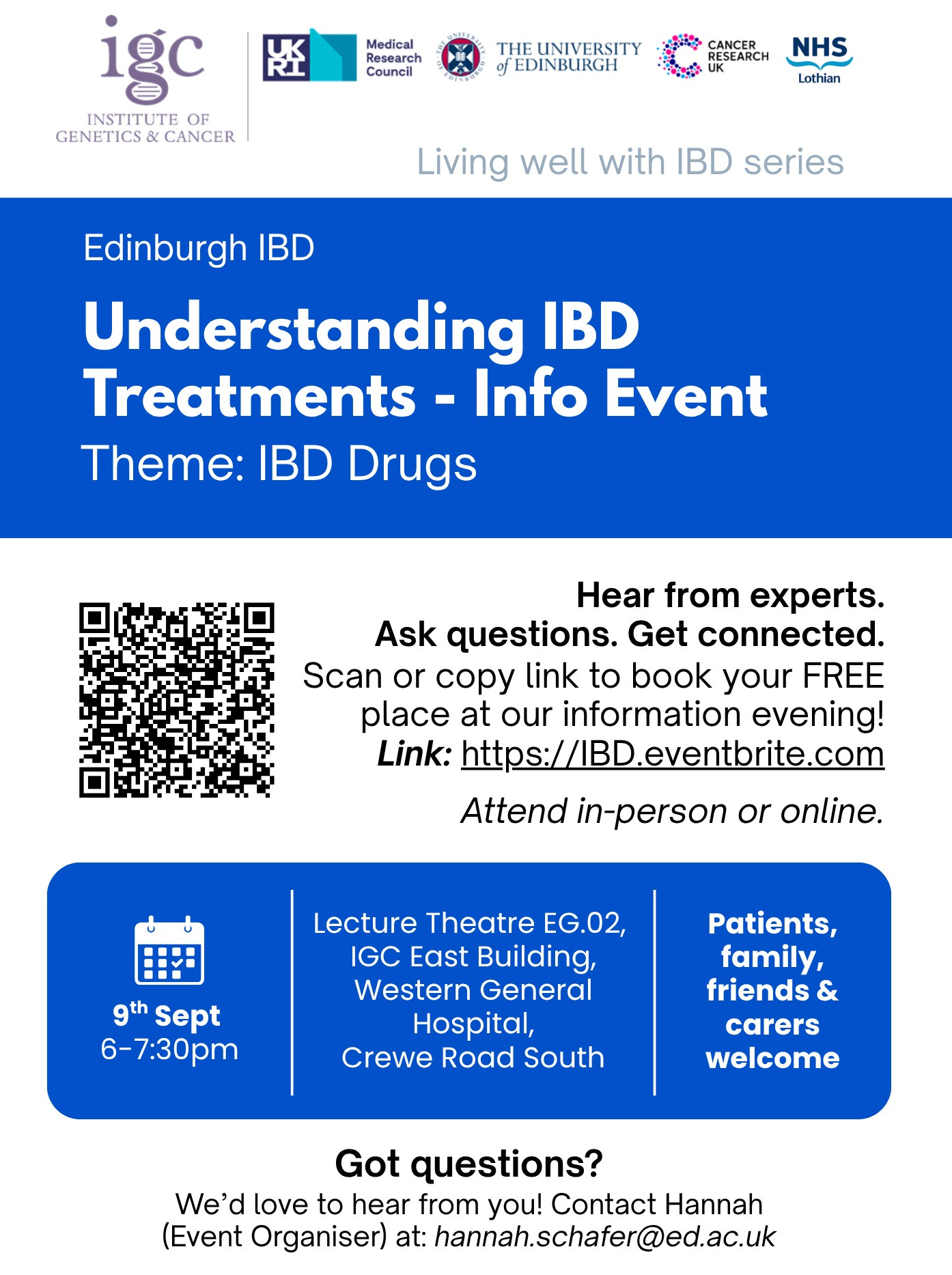
That’s why, in June, patients, families and carers filled a lecture theatre at the Western General for our first Living Well with IBD evening. On 9 September, we’re doing it again, this time to talk about IBD medicines.
Why might one treatment be chosen over another? How do we know whether it is working? What happens if it stops working? Can treatment ever be stopped, and what options are coming next?
Our clinical team will discuss these questions, explain the different types of IBD medicine and leave plenty of time for questions from the room.
For the first time, the event will also be available online. Anyone can register and watch the one-way livestream, wherever they are in the world.
These events are an important part of how we want Edinburgh IBD to work.
Outreach, education and community-building are not optional extras. Informed, connected patients are better placed to participate in decisions about their health. The events also allow our clinical and research teams to hear directly about what matters to patients and families.
Event details
Wednesday 9 September 2026
Doors open at 18:00 UK time
Talks and questions from 18:15 to 19:30
In-person discussion, posters and refreshments until 20:00
Lecture Theatre EG.02, IGC East Building, Western General Hospital, Edinburgh
Attend in person or watch the one-way livestream
Registration is free
Patients, family members, friends and carers are all welcome.
Book your free place through Eventbrite
This is the second event in a growing series.
Future evenings will explore diet, psychological wellbeing, monitoring, surgery, AI and wearables, the gut microbiome, fatigue and intimacy.
We want patients and families to help shape what comes next.
These free events are part of our wider work to build more proactive, predictive and patient-centred IBD care. If you would like to help us continue that work, you can learn more about supporting Edinburgh IBD research.
Gran iniciativa, crear una comunidad de pacientes, familias, amigos y colegas
Patient-centered outcomes in IBD are increasingly recognized as distinct from endoscopic remission metrics. Fecal calprotectin normalization and mucosal healing remain important clinical targets, but patient-reported quality of life, fatigue, and functional capacity often diverge significantly from these objective markers and require parallel clinical attention that standard review cycles do not always provide.