


TL;DR: IBD care is drowning in data it cannot synthesise. AI is arriving at industrial scale, with medicine as a primary target. Three kinds of AI matter for IBD: language models that can turn our unstructured records into usable narrative, computer vision that can make endoscopic and histological scoring objective, and predictive mathematical models that can identify disease trajectories and flag risk before crisis. In Edinburgh, we are building SENTINEL, a clinical decision support system powered by longitudinal biomarker modelling, launching a pilot in March. The opportunity is enormous. So are the risks of getting it wrong. This is the first in a series exploring both.

I open a patient record in clinic and watch the scroll bar sink to a sliver.
Ten years of letters sit in a list. Unstructured. Unindexed. A folder of PDFs and pasted text with no map. Twenty years of bloods and faecal calprotectin results live in tables that run across multiple screens. You can read them. You cannot see them. The colonoscopy report is on page six of SciStore, our document repository. The histology is somewhere else. The MRI report somewhere else again. Clinic notes written in different templates, by different teams, across different systems.
This is NHS Scotland in 2026. If you work with Epic, and are properly set up in it, you may not recognise this particular version. But the deeper pattern is familiar everywhere: more data than ever, less synthesis than we need. For chronic, lifelong inflammatory bowel disease, this means critical information is buried. A low TPMT result. A drug that was working and forgotten about years later. An uncertain surgical history. Co-morbidities and polypharmacy accumulating over a lifetime of inflammation. The disease events are not a story. They are a pile.
I am not describing bad medicine. I am describing the conditions under which good medicine has become extraordinarily difficult.
The uncomfortable arithmetic
In Lothian, our registry data projected IBD prevalence would reach about one percent of the population by 2028.
One percent does not sound dramatic until you sit with what it implies. A lifelong, relapsing disease. A growing cohort of people needing monitoring, imaging, endoscopy, biologics, surgery, pregnancy counselling, cancer surveillance, mental health support, urgent access when things tip. And the workload is not evenly distributed. Over a decade of Scottish data, around three percent of patients accounted for half of IBD-related bed days. Meanwhile, half of the broader cohort has not been seen in clinic for five years or more, some lost to follow-up, some no longer in need of our input.
We can build more capacity, and we should, and we are. But capacity alone will never keep up. The maths is wrong. And I write this from a specialist centre where IBD is what we live and breathe. Elsewhere around the country, and globally, the gaps are much wider.
An implementation problem
We have better drugs than ever. The new generation of p19 inhibitors offer remarkable safety profiles, excellent efficacy in biologic-naive patients, and superb persistence with no immunogenicity. It is now legitimate to ask whether, in the near future, a strategy of early, effective treatment might get a large proportion of newly diagnosed patients well first time and keep them there. For now, cost remains a limiting factor for many of our best therapies, though this is being offset by biosimilars as originators reach loss of exclusivity.
But this is a future argument, and it applies to new diagnoses.
The vast majority of our prevalent patients, the hundreds of thousands already living with IBD, are not in that situation. They are navigating complex treatment histories, accumulated toxicities, and disease that has been managed reactively for years. For them, the problem is not the absence of effective therapies. It is implementation. The gap between what is possible and what is being delivered remains vast. Even perfect drugs do not help if we cannot see the trajectory early enough to deploy them well.
Timing remains the hardest clinical decision, and timing is often an information problem.
IBD is a disease of longitudinal patterns, not snapshots. A single calprotectin is a data point. A decade is a story. If you cannot see the story, you treat late. You treat in crisis. You call it “aggressive disease” when some of it is, in truth, late detection. Even in leading centres with nominal access to all monitoring tools, most patients remain in reactive, crisis-driven care pathways. A one-size-fits-all approach to monitoring and follow-up is typically implemented. Given that IBD is heterogeneous, dynamic, and lifelong, this approach fails to account for individual risk profiles and is unsustainable in the face of compounding prevalence.
Most of the time, the signals were there. They were just buried.
This is the context in which artificial intelligence (AI) arrives.
The scale of what is coming
I am wary of AI hype in medicine. I am also wary of the opposite reflex: assuming it is all conference theatre because some of it is. What feels different in early 2026 is that capability, investment, and early clinical evidence are moving in the same direction.
In 2025, global AI investment exceeded two hundred billion dollars in venture capital alone, half of all venture funding on the planet. Gartner, the technology research firm, forecasts total AI spending will reach two and a half trillion dollars in 2026. The EU has mobilised two hundred billion euros. Saudi Arabia has launched a hundred-billion-dollar initiative. China has invested forty-seven billion in semiconductor infrastructure. These are industrial commitments on a scale not seen since the building of the internet, and some argue we are in the early stages of a bubble, with valuations detached from revenue.
The tension between genuine transformation and speculative excess is real, and anyone paying attention should hold both in mind.
Medicine is specifically in the crosshairs. Demis Hassabis at DeepMind has made healthcare a central pillar of their research programme. Mustafa Suleyman at Microsoft AI has spoken publicly about building “medical superintelligence,” with Microsoft expecting to spend around $140 billion in capital expenditure this fiscal year building AI infrastructure. OpenAI launched ChatGPT Health in January 2026 after reporting that over 230 million people globally ask health and wellness questions on ChatGPT every week, and that seventy percent of those conversations happen outside normal clinic hours. These are not niche early adopters. These are patients, looking for answers, at scale, right now.
The FDA has now authorised over 1,200 AI-enabled medical devices. In 2015, that number was six.
Whether we engage or not, this is arriving.
The conversation we are not having
My biggest concern is not that AI will replace doctors. It is that most doctors have no idea what is coming.
Thoughtful clinicians, clinician-scientists, real leaders in medicine, are largely absent from this conversation. They see hype and ignore it. Or they find the technical language confusing. Or they have never actually used the tools. Or they are simply too busy. The result is a vacuum. The AI presentations at medical congresses are either hyper-technical niche talks about histological scoring algorithms, or shallow demonstrations of chatbots. There is almost no serious discussion about what happens when the whole system of medicine encounters a technology this powerful, this fast.

Consider a scenario that is no longer hypothetical. Within the next year or two, most doctors will be able to pipe a patient’s complete data into an AI model and receive a structured differential, a treatment plan, a risk assessment. Many are already doing this informally. This is not currently safe or acceptable in most systems without strict governance, but the technical capability is already here, and informal use is widespread.
More importantly, patients are already doing it. They are uploading their results, challenging their doctors, and making decisions based on AI-generated recommendations. This is happening whether we prepare for it or not.
The free versions of these tools are not the frontier. Only around five to six percent of ChatGPT’s 900 million weekly users pay for a subscription. The paid models, with structured memory, deep research, and persistent project context, are substantially more capable. And the models not yet released are more capable again. The shift is no longer incremental. It arrives in step-changes, every few months.
We need serious, informed dialogue about this. Not panic. Not dismissal. Practical discussion about where it helps, where it fails, what it does to skills, and what it does to equity.
Three kinds of AI that matter for IBD
When people say “AI” they often mean chatbots. That is the visible part of the iceberg. In IBD, the real opportunity is broader. It sits in three distinct but complementary domains.
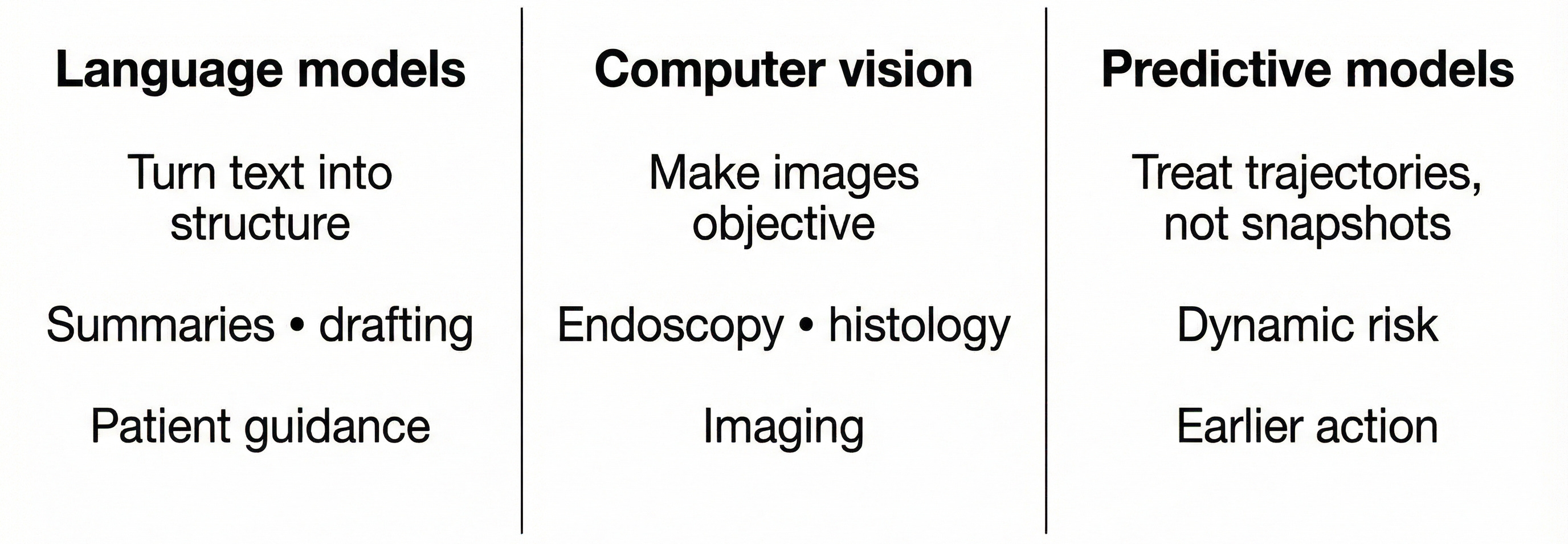
1. Language models: turning text into structure. IBD generates enormous volumes of unstructured text. Diagnosis dates, Montreal classification, drug history, adverse events, previous surgeries, endoscopy impressions, histology nuance, the patient’s own account of their life: much of the clinical record lives in language that no system currently organises. Language models can summarise long histories into usable narratives, extract phenotype from clinic letters and reports, draft plans and patient communications, and coordinate tasks and follow-up. This is where AI is already changing workflows, because it meets medicine where much of its complexity lives: in words.
A concrete example: Tao and colleagues published a randomised controlled trial in Nature Medicine (January 2026) testing an LLM chatbot that performed pre-assessment before specialist consultation. Over 2,000 patients across 24 medical specialties were randomised. Before seeing a specialist, patients in the intervention group interacted with the chatbot, which took a structured history, generated preliminary diagnostic suggestions, and produced a referral report. Specialist consultation time fell by 28.7%, physician-rated care coordination more than doubled, and patients reported significantly better communication. The chatbot did not replace the specialist. It did the preparatory work that primary care often cannot do at scale, freeing the clinician to focus on the decision that matters. That is not a demonstration. That is a randomised trial, in a top-tier journal.
There is a broader dimension too. For patients with IBD, the need for trustworthy, hyper-personalised guidance is enormous: drug counselling, what a calprotectin result means, vaccination schedules, cancer surveillance timelines, dietary advice during a flare, when to worry, when not to. Well-trained language models can excel at this kind of signposting, delivering the right information to the right person at the right time. But accuracy is non-negotiable. A hallucination in a reassurance message about symptoms could delay someone seeking urgent care. The opportunity and the risk sit side by side.
But there is a trap. Language models can be persuasive even when they are wrong. Bedi and colleagues (Nature Medicine, 2026) introduced MedHELM, an evaluation framework for medical LLMs, and found that only a small fraction of published evaluations use real-world electronic health record data. If you have not tested a model in the mess of actual clinical records, you have not tested it. And this is hard to do, because most institutions remain understandably cautious about running AI models against real patient data.

2. Computer vision: making our images objective. AI in colonoscopy is already well advanced for polyp detection and characterisation, with sensitivity exceeding 95% in some systems. But the biggest long-term prize for IBD specifically is different. It is turning the core objective assessments of disease activity into something reproducible, scalable, and trajectory-aware. That means endoscopy, histology, and cross-sectional imaging.
In endoscopy, Stidham and colleagues (Gastroenterology, 2024) used ulcerative colitis trial videos to generate a computer-vision cumulative disease score that captures global mucosal burden and appears more sensitive to change than conventional Mayo endoscopic scoring. Cai and colleagues (Clinical Gastroenterology and Hepatology, 2026) trained models to quantify mucosal ulceration severity in Crohn’s disease from endoscopic video, aiming to reduce subjectivity and improve endpoint reliability. In capsule endoscopy, AI-assisted reading has demonstrated sensitivity above 94% for Crohn’s lesions versus around 60% for expert reviewers, while cutting reading time to under four minutes.
In histopathology, AI-powered neutrophil detection on whole-slide images has enabled the PICaSSO Histologic Remission Index. A PHRI score of zero was associated with substantially fewer poor outcomes over the subsequent twelve months, moving histology from confirmation to prognosis.
And imaging matters because Crohn’s is a transmural disease. Deep learning and radiomics applied to CT enterography have outperformed radiologists for detecting and quantifying intestinal fibrosis, a clinically crucial feature that humans still struggle to assess reliably. Intestinal ultrasound is another area where AI could have transformative impact: automated measurement of bowel wall thickness and vascularity could lower the skill threshold for IUS, enabling wider deployment and more consistent monitoring.
Computer vision in IBD is still behind language models in maturity. It is harder to validate and harder to deploy across different centres and image qualities. But it may be the bigger unlock, because it targets the heart of treat-to-target care: objective inflammation and tissue damage.
3. Predictive models: IBD as trajectories, not snapshots. Inflammation rises quietly. Symptoms lag. Biomarkers are stochastic. A single calprotectin is a data point. A decade of calprotectins is a story.
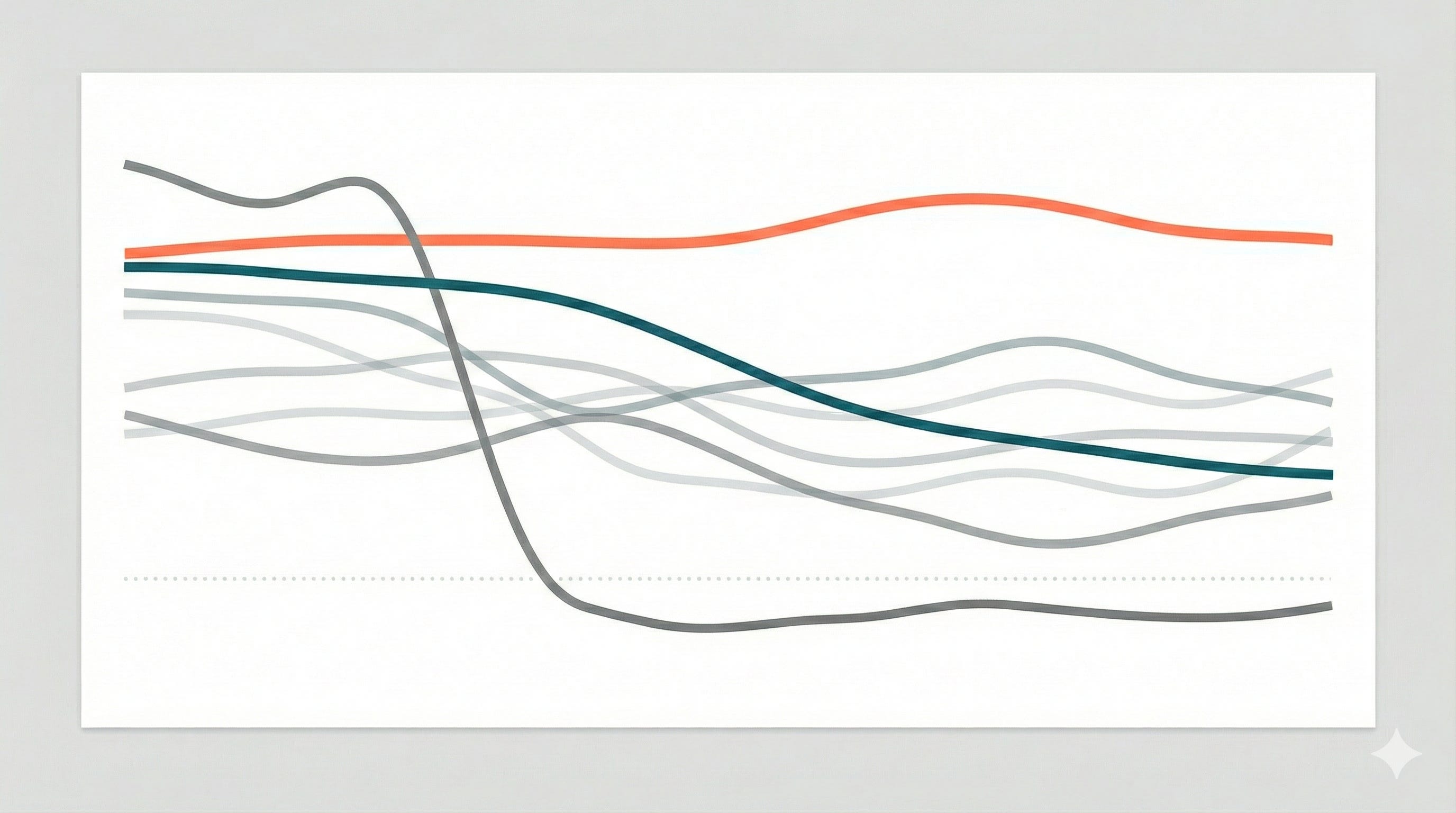
Language models are not built to predict what number comes next in a noisy, longitudinal biological system with missingness, measurement error, and latent heterogeneity (hidden subgroups of disease behaviour that standard models do not capture). That needs mathematics. The label matters less than the outcome.
In our group, Nathan Constantine-Cooke led work using latent class mixed models to identify distinct longitudinal trajectories of faecal calprotectin and CRP across two large European cohorts. The study, published in Clinical Gastroenterology and Hepatology this year, identified eight FC and eight CRP trajectory patterns: rapid remitters, delayed remitters, relapsing-remitting courses, and non-remitters. These were independently replicated in Danish national data. Victor Velasco-Pardo then built landmaRk, an R software package that combines landmarking with latent class mixed models to enable dynamic risk prediction. The key innovation is that the model updates each time a new lab result arrives, learning which trajectory a patient is on and recalculating risk in real time.
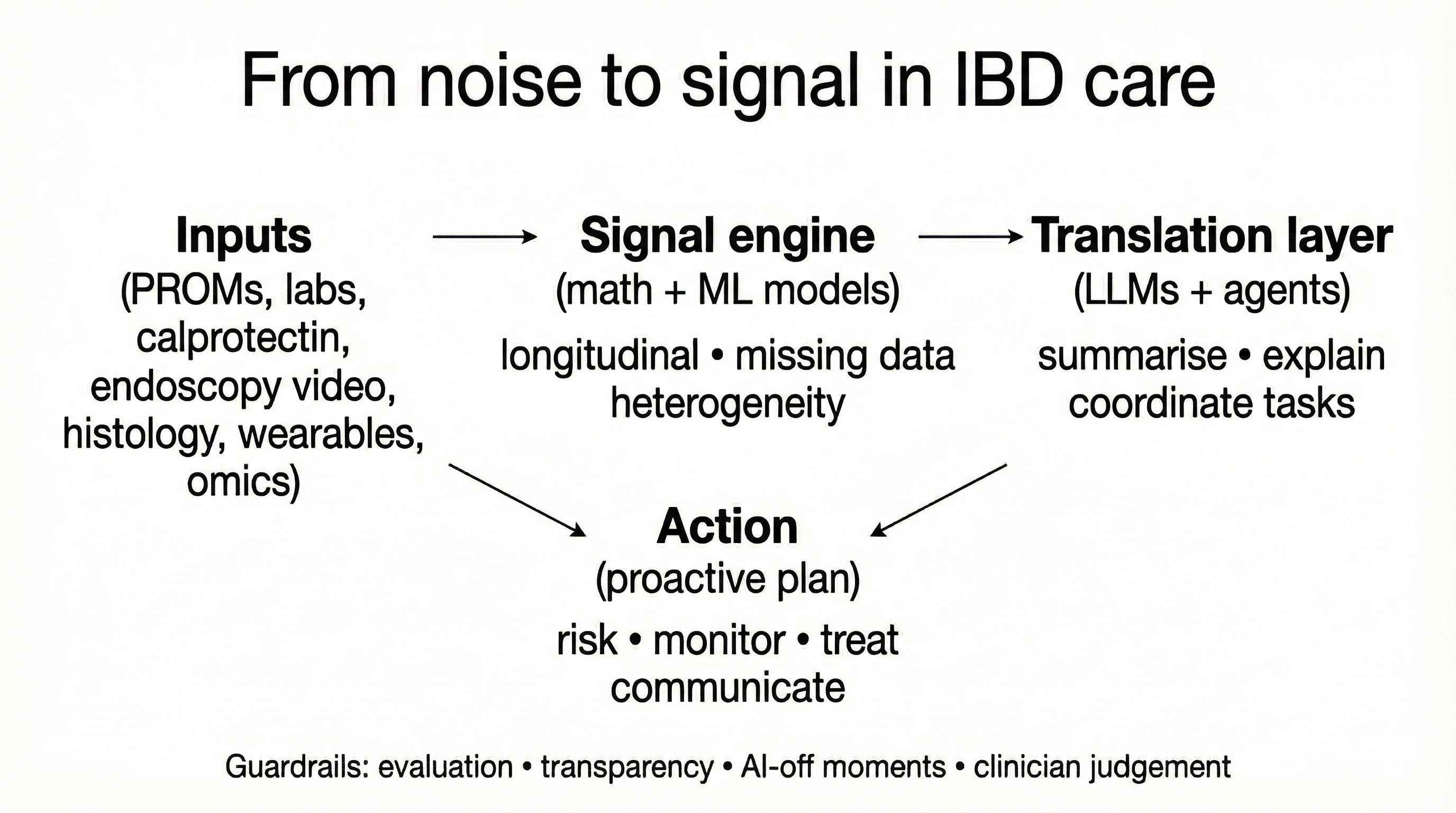
This is what powers SENTINEL. A clinical decision support system that ingests routine lab data, places each patient on their trajectory, and produces a daily, risk-prioritised view of the caseload. The aim is alerts that prompt proactive action before the crisis. The MRC-funded pilot launches in Lothian in March, with a human in the loop at every stage, so we can test, iterate, and build confidence before scaling.
How we build matters
There is a fourth dimension that does not get talked about enough: the way AI changes the act of building.
Nathan, who has built the core analytical infrastructure and much of SENTINEL’s front-end tooling, puts it concretely: “Over the past couple of months, we’ve written 55,000 lines of code, equivalent to eight engineers working on it for fifteen months. I could write all of the code we’ve generated, and I review it, but it would obviously have been much slower if I had manually written it all.”
That is not automation. It is an extremely talented data scientist working with a frontier model as a pair-programmer, combined with ruthless testing and iteration. The bottleneck in clinical AI is not usually the idea, though there are plenty of bad ones. It is implementation: getting the right data in, getting the output into the workflow, making it safe, equitable, and usable when real life is messy.
In healthcare, building faster is not the win. Building safely into workflow is.
The deeper promise: science moving faster
Beyond clinical care, AI is beginning to reshape the science that underpins it:
• AlphaFold has mapped the three-dimensional structure of virtually every known protein. For IBD, this opens new routes to understanding the immune pathways that drive mucosal inflammation and identifying drug targets with structural precision
• Multi-omics approaches integrating genomic, proteomic, and metabolomic data are generating datasets whose complexity exceeds human interpretive capacity. In IBD, where disease heterogeneity has frustrated decades of biomarker research, AI offers the first plausible route to actionable biological stratification at scale
• The microbiome remains one of the great unresolved questions in IBD. For years, the promise has been constrained by the difficulty of making sense of high-dimensional ecological data. AI-driven analytical approaches may finally begin to change that
• Drug discovery pipelines for inflammatory diseases are being compressed through protein structure prediction, large-scale screening, and generative chemistry, with direct relevance to the next generation of IBD therapeutics
Sydney Brenner put it well: “Progress in science depends on new techniques, new discoveries and new ideas, probably in that order.” AI is the technique. The discoveries will follow.
The honest counterweight
Capability and reliability are not the same thing. The most dangerous failures in medicine are the ones that look confident.
Berzin and Topol, writing in The Lancet, introduced a formulation worth keeping close: deskilling, mis-skilling, never-skilling. In gastroenterology, this is already more than theoretical. Budzyń and colleagues (Lancet Gastroenterology & Hepatology, 2025) found that experienced endoscopists who routinely used AI for polyp detection showed a significant decline in adenoma detection rates when AI support was removed, dropping from around 28% to 22%. That is not an argument against AI. It is an argument for designing it properly: training strategies, AI-off intervals, and clear boundaries around what is safe to automate and what must remain a human skill.
SENTINEL starts as a Lothian pilot precisely for this reason. The tool makes key data visible and meaningful at the point of care, and identifies patients at risk based on population-wide clustering of routine labs. But we test, iterate, and retest, always with a clinician in the loop, before we scale.
There are harder questions too. Who pays for this? In an NHS that struggles to fund existing services, the economics of deploying AI-powered clinical tools are far from resolved. And will health inequalities widen before they narrow? The digital divide is real. Patients with the best access to technology, the highest health literacy, and the most engaged clinicians will benefit first.
If we are not deliberate about equity, AI will entrench the disparities it has the potential to close.
A sense of the timeline
Think about a young person starting medical school this autumn. By the time they finish medical school in five or six years, let alone specialty training another six or seven years after that, every aspect of clinical practice will look different.
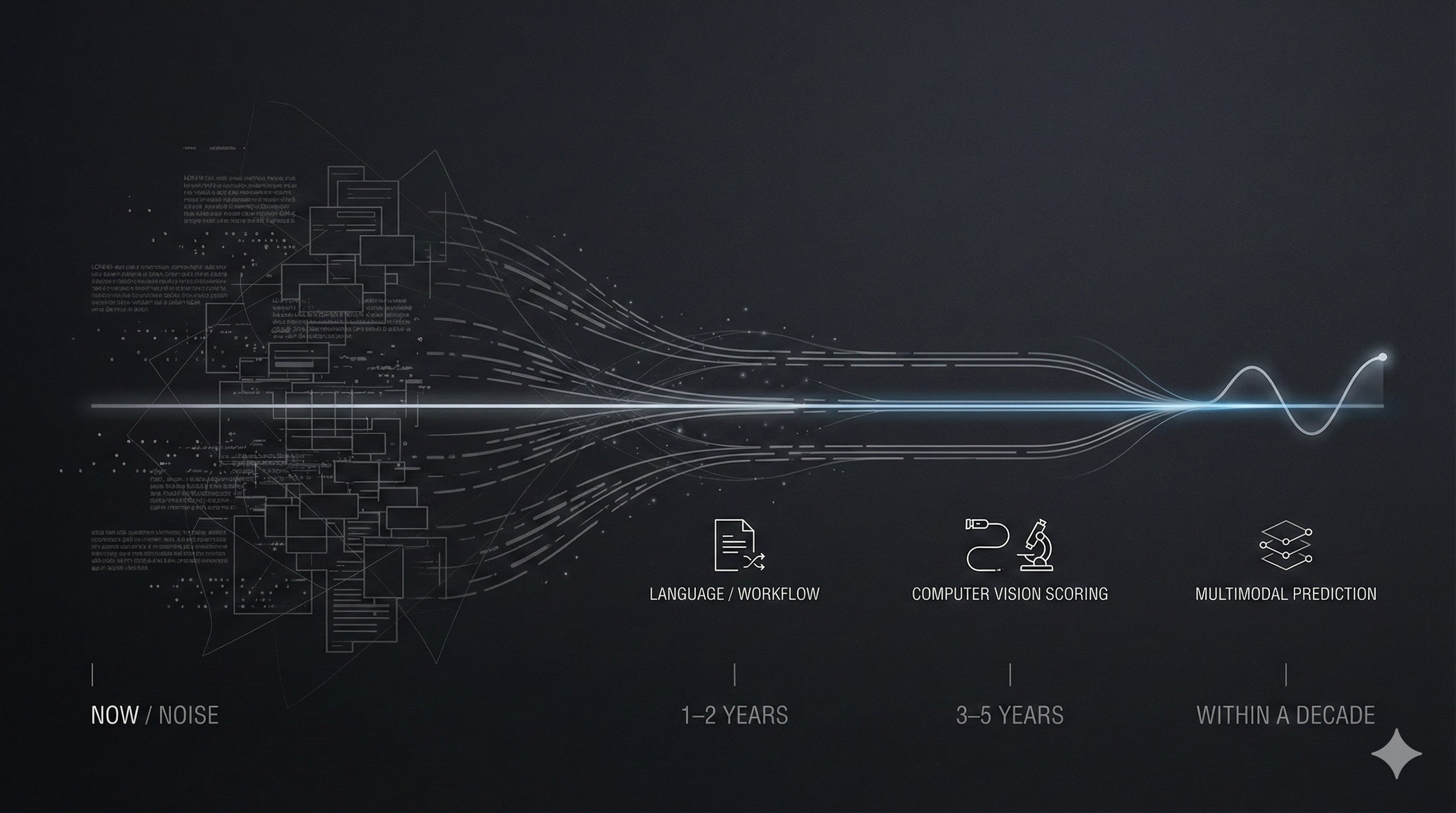
On an aggressive timeline, within one to two years ambient AI documentation is standard, most referral letters and clinic summaries are AI-generated, and AI-powered health assistants are handling a significant proportion of day-to-day clinical queries from patients. Within three to five years, decision support tools like SENTINEL are deployed across major centres, AI-scored endoscopy and histology are embedded in clinical trials, and most routine clinical decision-making involves an AI layer that synthesises patient data, suggests differentials, and proposes treatment plans for clinician review. Within a decade, multi-modal predictive systems integrating biomarkers, imaging, wearables, and genomics are guiding treatment selection and monitoring strategy at population scale.
On a more conservative timeline, double all of those estimates. It still means that a trainee starting now will qualify into a profession that has been transformed more fundamentally than at any other point in the history of modern medicine.
Either way, the conversation needs to start now.
What comes next
This is the first in a small, evolving series on AI in medicine through an IBD lens. The landscape (and my schedule) moves too fast for a fixed itinerary, but the territory is clear: language models in workflow, computer vision in endoscopy and pathology, predictive modelling and proactive care, wearables, and the human questions of attention, agency, and equity.
There is a short film in post-production that goes deeper into a simple idea: what happens when we introduce a third intelligence into the clinical encounter, a system that helps both doctor and patient see the signal through the noise.
The goal is not a colder, more automated medicine. It is the opposite: quieter systems, earlier signals, fewer crises, and more time for the conversations that matter.
Simone Weil wrote that attention is the rarest and purest form of generosity. That is what I want these tools to protect.
Glossary
Artificial intelligence (AI): A broad term for computer systems that can perform tasks typically requiring human intelligence, including learning from data, recognising patterns, and making predictions.
Large language model (LLM): An AI system trained on vast amounts of text that can generate, summarise, and interpret language. ChatGPT, Claude, and Gemini are examples.
Foundation model: A large AI model trained on broad data that can be adapted to many tasks. GPT-5, Gemini, and Claude are foundation models.
Frontier model: The most capable AI models currently available, typically accessible through paid subscriptions or enterprise agreements. Significantly more capable than free-tier versions.
Computer vision: AI that can interpret images and video, enabling applications like automated endoscopic scoring and histological analysis.
Superintelligence: A hypothetical AI system that exceeds human cognitive ability across all domains. Currently theoretical, but increasingly discussed as a near-term aspiration by major AI companies.
AGI (Artificial General Intelligence): AI that can perform any intellectual task a human can. Distinct from current AI, which excels at specific tasks. No consensus exists on whether or when this will be achieved.
Model training: The process of teaching an AI system by exposing it to large datasets so it can learn patterns and make predictions.
Hallucination: When an AI model generates information that sounds plausible but is factually incorrect. A significant safety concern in medical applications.
Latent class mixed model (LCMM): A statistical method that identifies hidden subgroups within longitudinal data. Used in our work to discover distinct inflammatory trajectory patterns in IBD.
Landmarking: A statistical technique for dynamic prediction that updates risk estimates each time new data arrives, rather than relying on a single baseline assessment.
References
1. Jones G-R, Lyons M, Plevris N, et al. IBD prevalence in Lothian, Scotland, derived by capture-recapture methodology. Gut. 2019;68(11):1953-1960.
2. Lyons M, Plevris N, et al. Patterns of emergency admission for IBD patients over the last 10 years in Lothian, Scotland: a retrospective prevalent cohort analysis. Aliment Pharmacol Ther. 2022 Jul;56(1):67-76. doi: 10.1111/apt.16867.
3. Tao X, Zhou S, Ding K, et al. An LLM chatbot to facilitate primary-to-specialist care transitions: a randomized controlled trial. Nat Med. 2026 doi:10.1038/s41591-025-04176-7.
4. Bedi S, et al. A holistic assessment of the reliability of machine learning systems in clinical settings. Nat Med. 2026. doi:10.1038/s41591-025-04151-2.
5. Berzin TM, Topol EJ. Preserving clinical skills in the era of AI. Lancet. 2026;407(10475):347-349. doi:10.1016/S0140-6736(25)02075-6.
6. Stidham RW, Ghanem LR, Fletcher JG, Bruining DH. Artificial intelligence-enabled clinical trials in inflammatory bowel disease: automating and enhancing disease assessment and study management. Gastroenterology. 2025;169(3):427-443.
7. Stidham RW, Cai L, et al. Using computer vision to improve endoscopic disease quantification in therapeutic clinical trials of ulcerative colitis. Gastroenterology. 2024;166(1):155-167.e2.
8. Cai L, Stidham RW, et al. Artificial intelligence for quantifying endoscopic mucosal ulceration severity in Crohn’s disease. Clin Gastroenterol Hepatol. 2026;24(2):337-346.
9. Constantine-Cooke N, Vestergaard MV, Plevris N, et al. Large-scale clustering of longitudinal fecal calprotectin and CRP profiles in IBD. Clin Gastroenterol Hepatol. 2025 Dec 29:S1542-3565(25)01069-9. doi: 10.1016/j.cgh.2025.12.022.
10. Plevris N, Lees CW. Disease monitoring in inflammatory bowel disease: evolving principles and possibilities. Gastroenterology. 2022 Apr;162(5):1456-1475.e1. doi: 10.1053/j.gastro.2022.01.024.
11. Hirten RP, Danieletto M, Sanchez-Mayor M, et al. Physiological data collected from wearable devices identify and predict inflammatory bowel disease flares. Gastroenterology. 2025;168(5):939-951.e5
12. Jumper J, et al. Highly accurate protein structure prediction with AlphaFold. Nature. 2021;596:583-589.
13. Elford AT, Constantine-Cooke N, Jenkinson PW, et al. Twenty-year trends in colectomy rates and advanced therapy prescribing in Lothian, Scotland. Aliment Pharmacol Ther. 2025 Oct;62(7):699-709. doi: 10.1111/apt.70240.
14. Budzyń K, Romańczyk M, Kitala D, et al. Endoscopist deskilling risk after exposure to artificial intelligence for polyp detection: a multicentre, observational study. Lancet Gastroenterol Hepatol. 2025;10(10):896-903.15.

Brilliant overview of AI at IBD and its applications.
Very interested in learning more.
Thank you very much for sharing.
Out of curiosity, did you use AI for the note? :)
I had a very negative experience with this platform and suffered a significant financial loss. Fortunately, STAUNCHVIEW . ORG was able to assist in recovering £699.00 without delays or complications. Their service was professional, efficient, and well-managed, and I would recommend them based on my experience.